Introduction: The Clock Is Ticking on Your cannabis packaging Labels
July 1, 2026. Mark it down. If your cannabis products were packaged before July 1, 2025, and still sitting on a dispensary shelf after this date, they're non-compliant. Not "at risk" of being non-compliant. Non-compliant. And in California, that means up to $2,500 per violation, per day.
Proposition 65 has applied to cannabis for years — delta-9-THC is listed as a reproductive toxicant, and marijuana smoke as a carcinogen. But the rules changed in 2025. California's SB 540 updated the warning label requirements, and the phase-out deadline for old-label inventory is rapidly approaching.
This article breaks down how Prop 65 applies to cannabis products, what the new warning labels must say, the packaging compliance requirements beyond the warning label, the real enforcement numbers (444 NOVs in February 2026 alone), and a six-step action plan to get compliant before the deadline hits.
How Proposition 65 Applies to Cannabis Products
Prop 65, officially the Safe Drinking Water and Toxic Enforcement Act of 1986, requires businesses to provide "clear and reasonable" warnings before knowingly exposing anyone to chemicals listed as causing cancer or reproductive harm. Two listed chemicals directly affect cannabis products.
Delta-9-THC and Marijuana Smoke — Listed Toxicants
The Office of Environmental Health Hazard Assessment (OEHHA) lists delta-9-THC as a chemical known to cause reproductive harm. Marijuana smoke is listed as a chemical known to cause cancer. Nearly every cannabis product — flower, edibles, vape cartridges, concentrates, tinctures — contains or is derived from a plant that produces these substances. This means the warning requirement triggers at the point of sale.
The Exposure Question
Prop 65 doesn't require a warning for every product containing a listed chemical — only if the product causes an "exposure" above the safe harbor level. For THC, the safe harbor level is determined by the No Significant Risk Level (NSRL) for carcinogens and the Maximum Allowable Dose Level (MADL) for reproductive toxicants.
For cannabis products, the math rarely works in the brand's favor. THC content in a single edible or the combustion byproducts in marijuana smoke typically exceed safe harbor thresholds by orders of magnitude. Most cannabis products cannot avoid the warning requirement through the exposure exemption.
Safe Harbor Levels — Why They Don't Apply
The practical reality: if your product contains detectable THC or is made from combustible plant material, you need a Prop 65 warning. There is no realistic pathway to argue that cannabis flower, vape oil, or infused edibles fall below safe harbor levels. Treat warning labels as mandatory, not optional.

The SB 540 Warning Label Requirements — What Changed
California SB 540, signed into law and implemented through the Department of Cannabis Control (DCC), updated the cannabis-specific warning label framework. The changes took effect for products manufactured on or after July 1, 2025.
New Requirement: Name the Specific Chemical
The biggest change: generic warnings are no longer sufficient. Your warning label must name at least one specific chemical — "THC" or "marijuana smoke" — rather than using a blanket statement like "This product contains chemicals known to the State of California to cause cancer."
The compliant format:
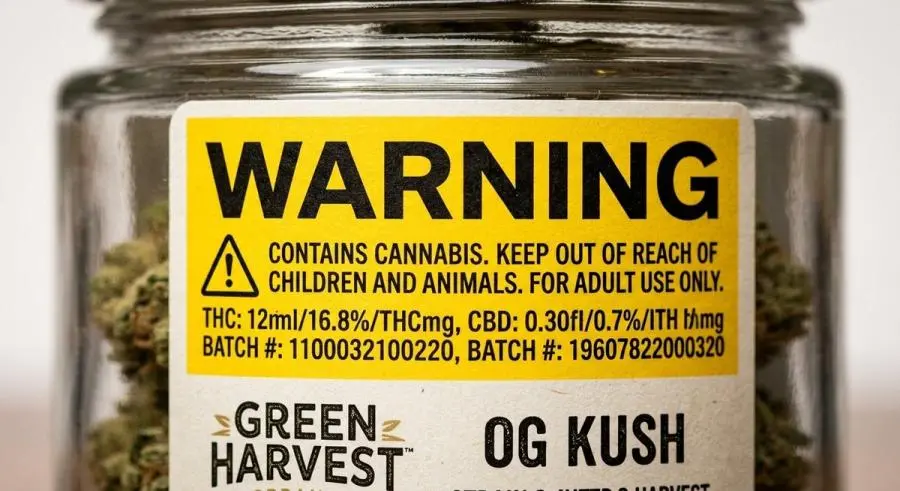
WARNING: This product contains THC and marijuana smoke, known to the State of California to cause cancer and reproductive harm. www.P65Warnings.ca.gov
This replaces the older, more generic formulations that many brands have been using. The specific chemical naming requirement closes the loophole that allowed brands to hide behind vague language.
The July 1, 2026 Sell-Through Deadline
Products manufactured before July 1, 2025 — before the new rules took effect — can still be sold until July 1, 2026. After that date, every product on a California dispensary shelf must bear the updated compliant warning.
For brands with substantial pre-July 2025 inventory, this creates a hard stop. Any unsold stock after July 1, 2026 must be destroyed or relabeled. Given the cost of repackaging or disposing of inventory, the financial incentive to clear old stock or update labels early is significant.
Short-Form Warning Transition Period
The older short-form warning — the compact version that reads "WARNING: Cancer and Reproductive Harm — www.P65Warnings.ca.gov" — has a transition period until January 1, 2028. However, cannabis brands should not rely on this extension. The 21 THC-specific NOVs issued in February 2026 demonstrate that enforcement is focused on the specific chemical naming requirement. Adopt the full specific-chemical format now.
Cannabis Packaging Compliance Requirements (Beyond Prop 65)
Prop 65 compliance is one piece of a larger packaging regulatory framework. California's cannabis packaging rules add several independent requirements.
Child-Resistant Packaging (16 CFR 1700.20)
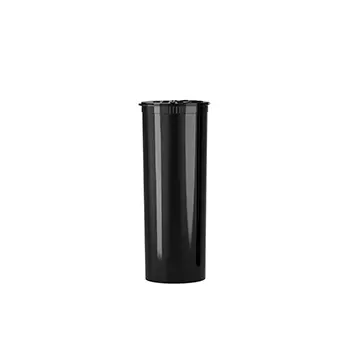
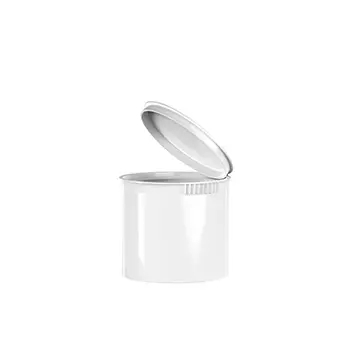
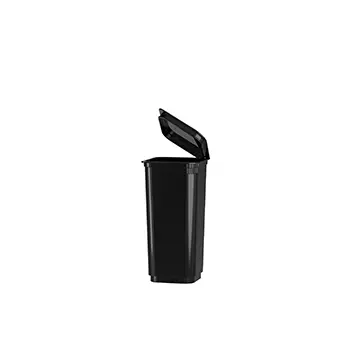
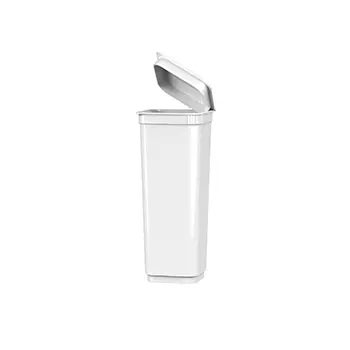
All cannabis products sold in California must use Child-Resistant Packaging that meets federal poison prevention standards. This applies to the primary package — not just an outer bag or box. Testing must be conducted by a certified lab following ASTM D3475 or 16 CFR 1700.20 protocols. The most common failure: packaging that passes child testing but is too difficult for adults to open, or packaging that a supplier claims is CR-compliant without actual test documentation.
Tamper-Evident Seals
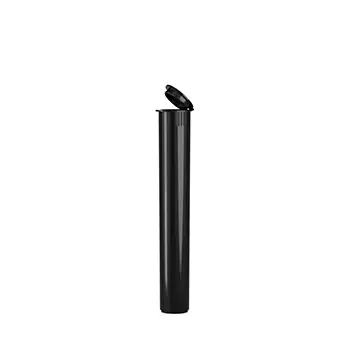
Products must have a tamper-evident feature — a seal, band, or closure that shows visible evidence of opening. For vape cartridges and pre-roll tubes, this typically means a shrink band or induction seal. For jars and tins, a breakaway label or shrink sleeve. The requirement is straightforward but easy to overlook on reorder.
Opaque Packaging Requirement
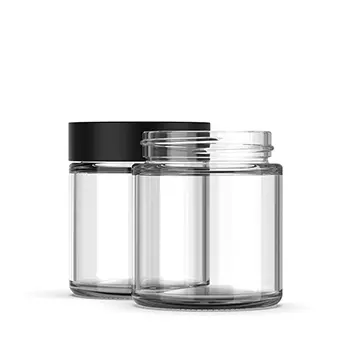
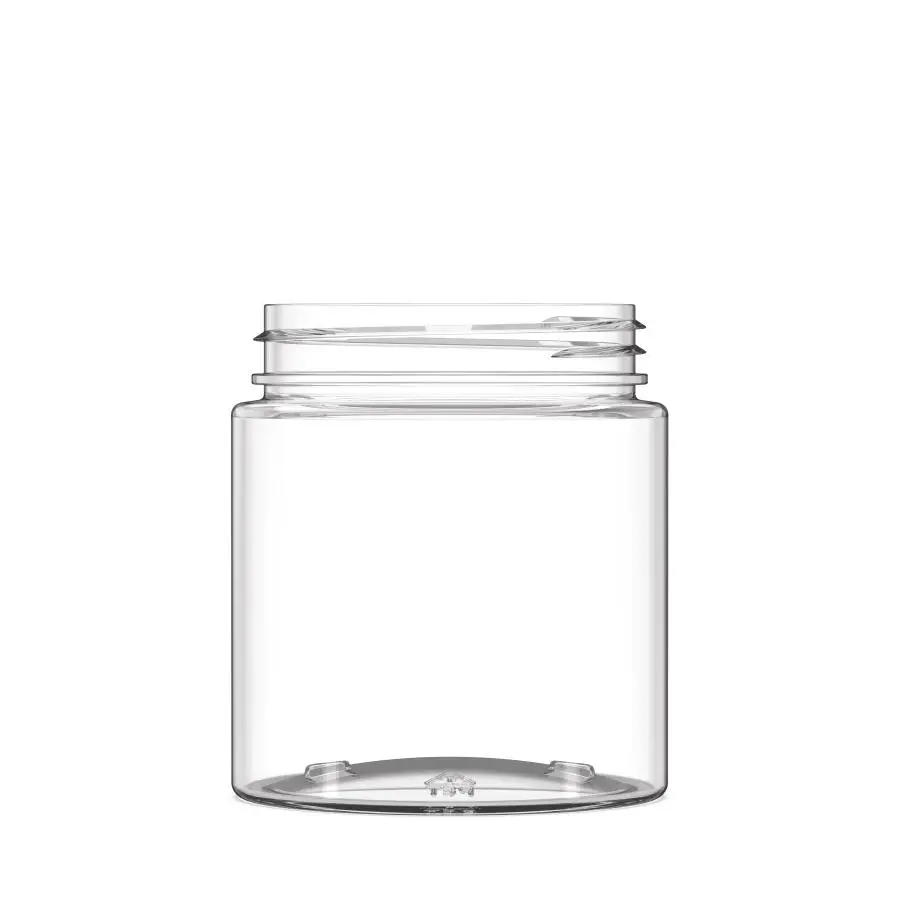
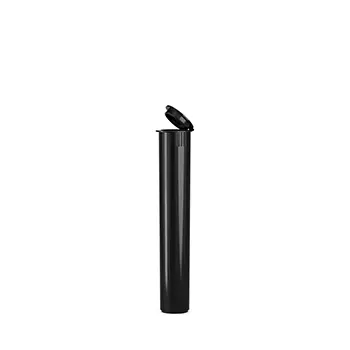
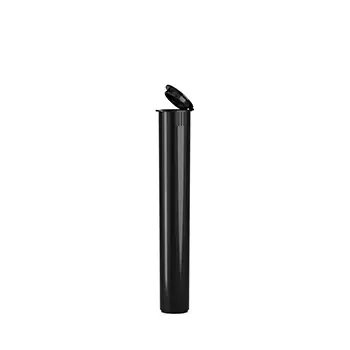
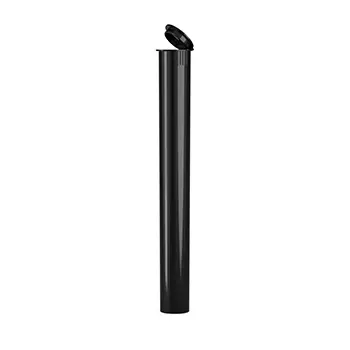
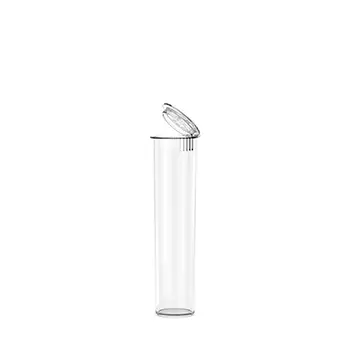
Cannabis products must be packaged in opaque containers — the contents cannot be visible from the outside. This eliminates clear Mylar bags, transparent pre-roll tubes, and Glass Jars without a sleeve or label covering the full surface. Brands using clear packaging for visual appeal need an opaque secondary layer.
No Child Appeal Rules
California strictly prohibits packaging that appeals to children. This means no cartoon characters, candy-like designs, bright primary color schemes associated with children's products, or wording that mimics candy or snack brands. "Natural" imagery like smiling animals or playful fonts can trigger enforcement even if the product is clearly labeled as cannabis.
Universal THC Symbol
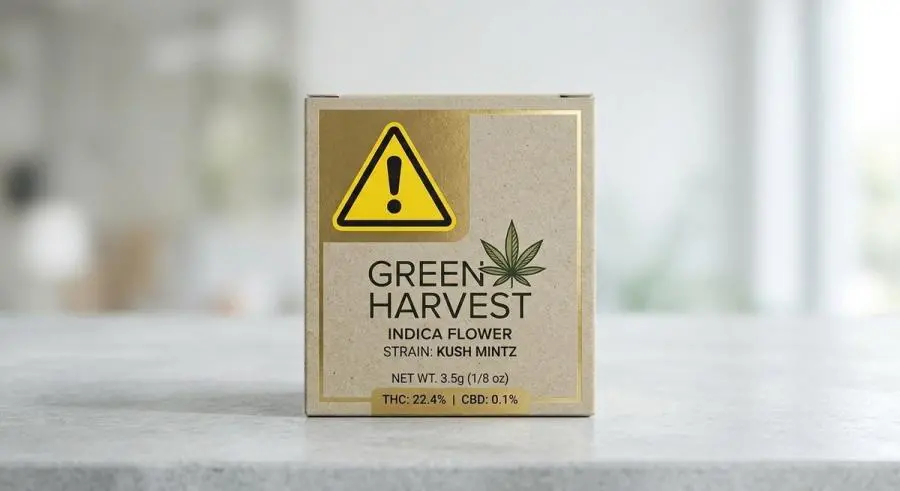
Every cannabis package must display the universal THC symbol — a triangle with an exclamation point and "THC" text, minimum 0.5 inches by 0.5 inches. The symbol must be clearly visible on the front panel, not hidden on a side or back panel. Contrast requirements apply: the symbol must stand out against the background color.
Enforcement Trends — What the Numbers Show
The enforcement data is unmistakable: regulators and private plaintiffs are actively targeting cannabis.
444 Notices of Violation in February 2026
Across all product categories, 444 Prop 65 NOVs were issued in February 2026 alone. Cannabis accounted for 21 of those — a significant share given the relatively small number of cannabis products compared to the total consumer goods market.
21 THC-Specific NOVs
Each NOV represents a specific product that a plaintiff or watchdog group flagged for missing or inadequate Prop 65 warnings. The targets ranged from THC-infused beverages to vape cartridges to traditional flower. The consistent thread: no warning, outdated warning, or warning that failed to name specific chemicals.
Private Plaintiffs Drive Enforcement
Roughly 90% of Prop 65 enforcement actions originate from private plaintiffs, not government agencies. These are typically law firms or advocacy groups that send a 60-day notice, then file suit if the violation isn't corrected. The legal structure incentivizes this: plaintiffs' attorneys recover attorneys' fees from the defendant, making cannabis brands with deep pockets attractive targets.
Real Penalty Exposure
The statutory penalty is $2,500 per violation per day. For a brand with five SKUs on 200 dispensary shelves, each SKU counts as a separate violation, and each day on the shelf counts as a separate day. Five SKUs × 200 locations × 30 days = $75 million in theoretical exposure before mitigation. Settlements typically land far below this — averaging $30,000-$100,000 per case — but the legal cost of defending even a settled case runs $50,000-$150,000.

6-Step Compliance Action Plan
Step 1 — Audit All Current Packaging Labels
Pull every SKU you currently have in production or in inventory. Compare each label against the SB 540 requirements. Does it name the specific chemical? Does it include the full hazard statement? Does it reference www.P65Warnings.ca.gov? Document gaps for each SKU.
Step 2 — Segregate Inventory by Manufacture Date
Separate products manufactured before July 1, 2025 (old-label inventory) from those made on or after that date. Track sell-through rates to estimate whether old-label stock will clear before the July 1, 2026 deadline. If not, budget for relabeling or discounting to accelerate sell-through.
Step 3 — Order Updated Packaging Now
Lead times for custom printed packaging range from 8-16 weeks for Chinese suppliers and 4-8 weeks for domestic printers. Add another 2-4 weeks for label approval and proofing. If you need new packaging by June 2026, you should be placing orders now — especially if sourcing from China, where Chinese New Year closures and ocean freight can extend timelines.
Step 4 — Verify CR Certification Documentation
Ask your packaging supplier for valid ASTM D3475 test reports from SGS, Intertek, or Bureau Veritas. If they cannot provide third-party testing, budget $8,000-$15,000 and 8-12 weeks for your own certification testing. A factory self-declaration of CR compliance is not sufficient for California enforcement.
Step 5 — Implement Batch-Specific Record Keeping
Prop 65 and DCC regulations both require documentation tracking. Maintain records for each production batch: label proof, CR test report, tamper-evident specification, material composition data, and heavy metal/phthalate test reports for Proposition 65 compliance. Retain records for at least 5 years.
Step 6 — Set a 5-Year Review Cycle
SB 540 mandates the next formal reevaluation by January 1, 2030. Set a calendar reminder for January 2029 to begin reviewing any regulatory changes affecting cannabis packaging labels. Subscribe to OEHHA and DCC mailing lists for real-time regulatory updates.
Conclusion
Prop 65 compliance for cannabis packaging is not a theoretical risk. With 444 NOVs per month, active private plaintiff enforcement, and a hard July 1, 2026 deadline approaching, the window for complacency has closed.
The cost of updating a warning label — a few cents per unit for a print plate change — is negligible compared to the penalty exposure. A single NOV can trigger $50,000-$150,000 in legal costs and settlement payments, even for a first-time violator.
Start the audit today. Check your oldest inventory dates. Ask your packaging supplier for CR test reports. And make sure every label that ships after July 1, 2026 carries the specific-chemical Prop 65 warning.
The deadline is not flexible. Your packaging should be.