1. Introduction
You run a cannabis brand in 2026. Google blocks THC-related ads. Meta bans cannabis product promotion on Facebook and Instagram. TikTok restricts hemp and CBD content. Even Mailchimp and Klaviyo have clauses that can shut down your account if they detect cannabis-related sales messaging.
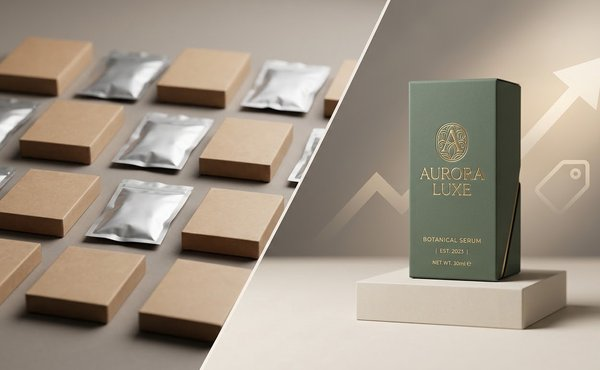
You are cut off from every major paid acquisition channel.
But every order you ship carries a marketing asset that nobody can ban, demonetize, or algorithmically suppress. Your packaging.
When a customer receives your box, you get their full attention for 30 to 60 seconds. They hold it. They likely film it. In that moment, your packaging is not a container. It is a media channel — cost per impression: zero. Engagement rate: 100%.
81% of consumers say packaging influences their gifting choices. 63% say it drives repurchase decisions. 72% admit package design influences what they buy in the first place (Pixels & Packs, 2026).
The question is not whether packaging can serve as a marketing channel. It is whether you are designing it to.
2. The Advertising Ban Loophole — Why Packaging Is Your Only Owned Channel
2.1 The Cannabis Ad Landscape in 2026
The restrictions are not uniform, but they are universally restrictive:
- Google: Bans all ads for THC-containing products. CBD and hemp-derived products face constant enforcement changes.
- Meta (Facebook/Instagram): Prohibits cannabis promotion regardless of THC content in most regions. Educational content can trigger account suspension if it runs alongside commercial intent.
- TikTok: Blocks branded cannabis content from paid promotion. Organic reach is possible but unpredictable.
- Email/SMS: Klaviyo, Mailchimp, Postscript restrict cannabis campaigns. Accounts are frequently frozen without warning.
Result: cannabis brands must rely on SEO, organic social, in-store discovery, and word-of-mouth — all take months or years to build.
2.2 Owned Media vs Paid Media — The Unit Economics
| Channel | Cost per Touchpoint | Engagement Rate | Platform Control |
|---|---|---|---|
| Google Ads (CPC) | $2–$8 per click | ~2% CTR | None — banned |
| Instagram Ads | $4–$10 per click | ~1% engagement | None — banned |
| Email Marketing | ~$0.001 per send | ~20% open rate | Partial — restricted |
| Packaging | $0.18–$2.20 per unit | ~100% open rate | Full — unregulated |
The packaging cost is already in your COGS. Every unit shipped is a guaranteed, full-attention impression at zero marginal media cost. Email reaches one in five. A package reaches every single customer who receives it.
2.3 Compliance as a Design Constraint, Not an Excuse
The common objection: child-resistant testing, warning labels, THC disclosures, and universal symbols eat up surface area.
The counter: leading brands have turned compliance into a design signature. Custom typography for warnings. Label colors matched to the brand palette. The universal cannabis symbol rendered as a brand badge. When done right, "compliant" reads as "legitimate, trustworthy, premium."
3. Engineering the Unboxing Moment — Physical Design That Demands Sharing
3.1 The 3-Second Shelf Test — Stopping Power in Retail
Before a customer unboxes, they must first buy. In a dispensary, your product competes with dozens of other brands on a crowded shelf. You have roughly three seconds.
72% of consumers say packaging design directly influences their purchase decision. Three design elements dominate that split-second:
- Color contrast: High-saturation or unexpected color combinations stop the eye. Matte black with neon spot UV creates a tactile-optical tension.
- Surface finish: Soft-touch lamination signals premium instantly. The brain associates tactile softness with product quality — confirmed by multiple haptic marketing studies.
- Structural uniqueness: Tubes, hexagon shapes, magnetic-closure rigid boxes, and sliding mechanisms all outperform standard tuck-end cartons in shelf tests.
3.2 The Unboxing Sequence — Choreographing the Reveal
Great unboxing runs in three acts:
Act 1 — The Outer Seal: Shrink wrap or sticker seal creates anticipation. Breaking it is the first sensory reward.
Act 2 — The Reveal: A well-designed interior — custom insert, tissue paper, branded inner sleeve — delays the product reveal by one or two seconds. That delay amplifies the emotional reward.
Act 3 — The Product Presentation: The product as crescendo. Nestled in a custom-cut insert, presented at the right angle, with reflective inner surface or contrasting liner color.
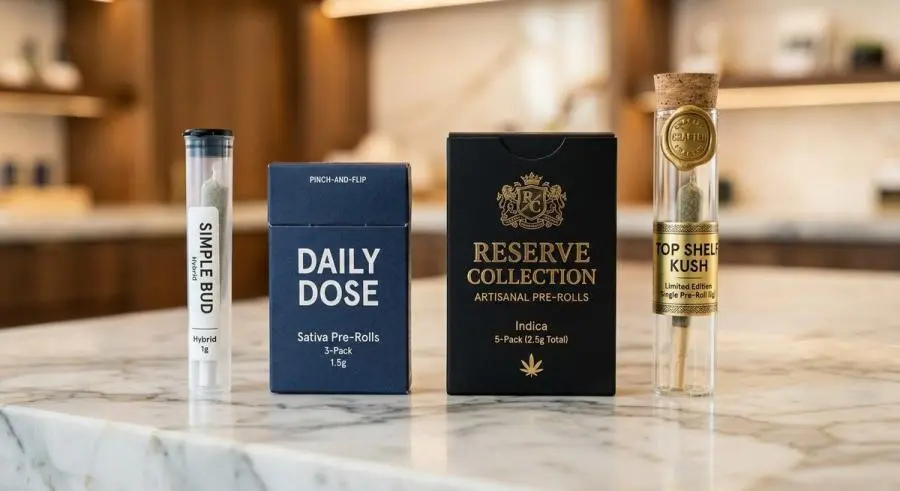
Dragonchewer's 2026 Pre-Roll Packaging Guide illustrates the tiering:
| Tier | Price Point | Packaging Type | Unboxing Feel |
|---|---|---|---|
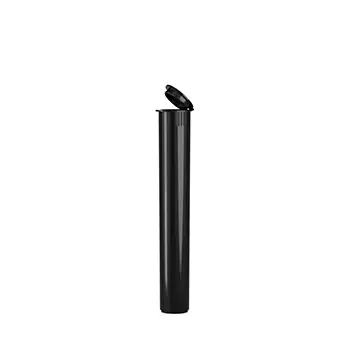
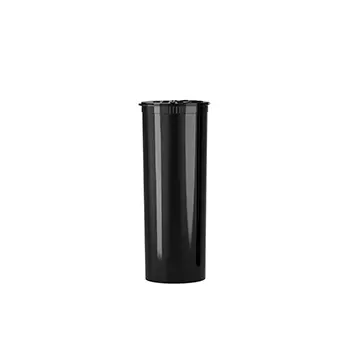
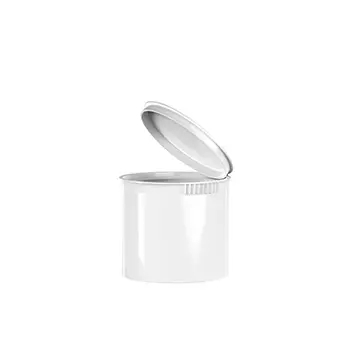
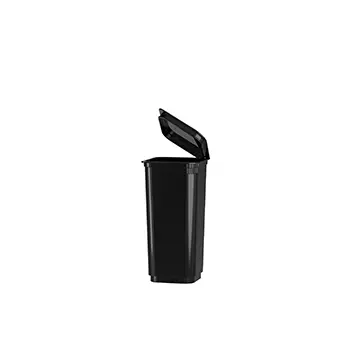
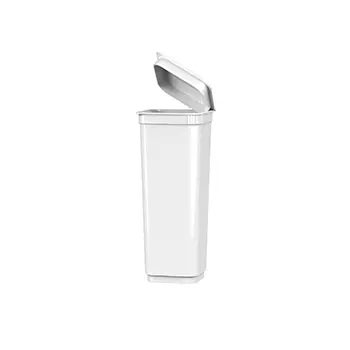
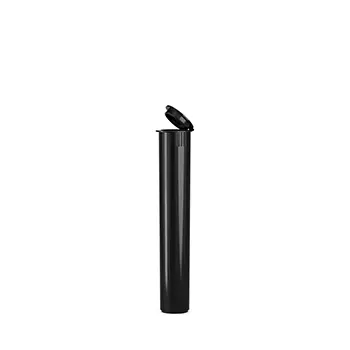
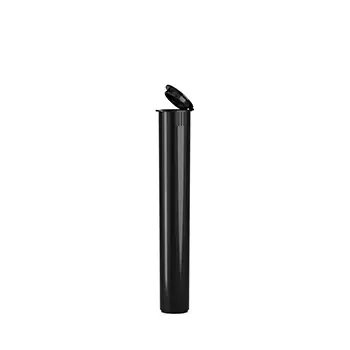
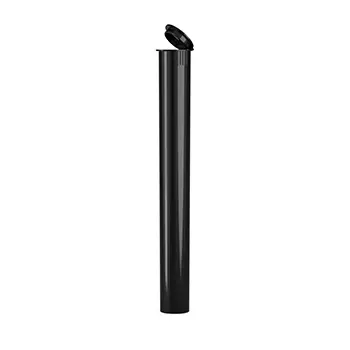
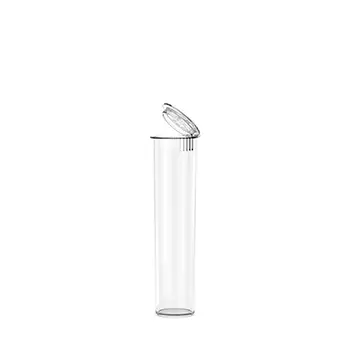
| Value | $8–$12 | Pop-top plastic tube | Functional, fast |
| Mid | $12–$20 | Pinch-N-Flip box | Satisfying click-open |
| Premium | $20–$35 | Press-N-Pull slider | Two-handed luxury reveal |
| Ultra-Premium | $35+ | Glass tube with cork/CR | Ritual, weighty, Instagrammable |
Each tier is a deliberate choice about what kind of unboxing moment — and what level of social sharing — the brand wants to generate.
3.3 Texture and Tactile Premiumization
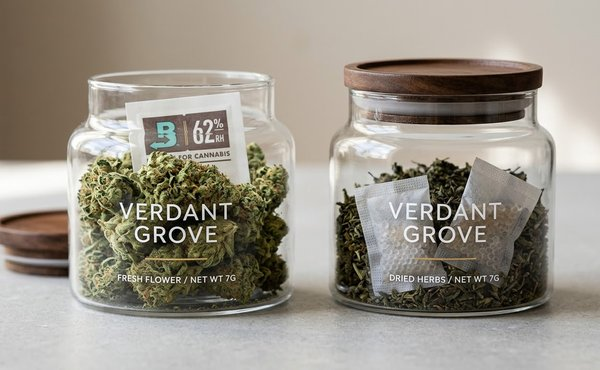
In 2026, soft-touch lamination is the baseline for premium cannabis packaging. The velvety finish triggers an immediate quality association. Paired with hot foil stamping for contrast, blind embossing for depth, spot UV for highlights — a box becomes a multi-sensory object.
Brands that upgrade from standard aqueous coating to soft-touch lamination with selective finishing report: - 15–25% increase in perceived product quality (blind testing) - 30–50% increase in social media sharing of the package - $2–$5 price premium acceptance from consumers
4. The Digital Layer — QR, NFC, and the Post-Unboxing Journey
4.1 QR Code Placement Strategy — Where and When Matters
QR codes are the standard bridge between physical packaging and digital. Placement determines performance.
- External QR (outside the box): Scanned at shelf. Scan rates: 1–3%. User is in browsing mode — unlikely to engage deeply.
- Internal QR (inside lid or insert): Scanned during unboxing. Scan rates: 10–15%. User is in discovery mode — highly receptive.
Best-performing QR destinations for cannabis packaging in 2026:
- Certificate of Analysis / Lab Results: 78% of consumers say easy access to lab results increases brand loyalty (Mylarmen 2026).
- Terpene and strain education: Consumers who read about their product feel more confident and connected.
- Re-purchase link: Captures intent at its peak — right after positive experience.
- Authentication: QR-based verification builds trust in a market with growing counterfeits.
4.2 NFC Tags — The Next Frontier
NFC tags embedded in packaging require no camera — a tap connects the phone to the brand experience.
Cost trajectory: $0.25–$0.50 per tag in 2022 → $0.08–$0.15 per tag in 2026 at volume. For a brand producing 100,000 units per year, the incremental cost is $8,000–$15,000 — less than a single Instagram ad campaign that will likely be rejected.
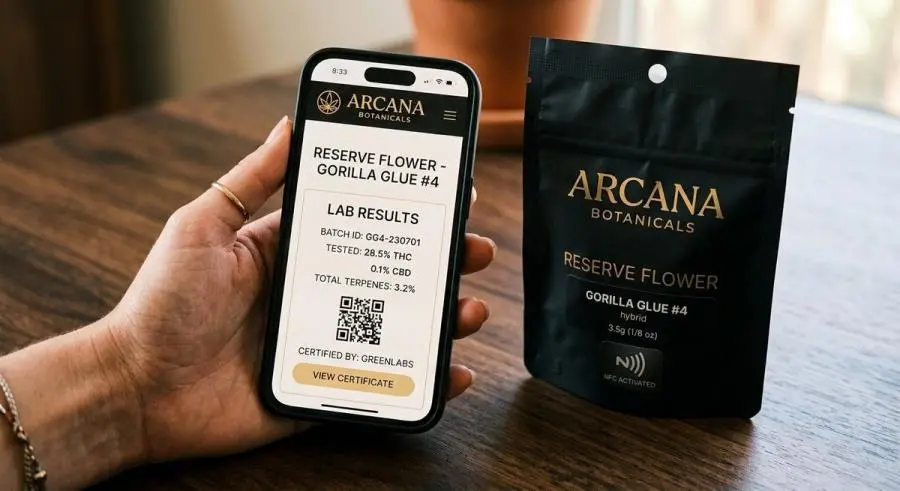
Real-world cannabis applications: - Product verification: Each unit gets a unique digital identity. Tap to confirm authenticity. - Loyalty integration: Tapping auto-checks in for loyalty points, linking physical product to digital customer profile. - Usage guidance: For vapes, concentrates, edibles — NFC delivers tailored dosing instructions and recipes.
4.3 Building a Post-Purchase Digital Experience
The most sophisticated brands treat the package as the beginning, not the end.
Flow: Customer purchases → receives → opens → scans QR or taps NFC → arrives at a branded digital experience → brand captures data (with consent) → retargets via email or SMS.
One-time buyer becomes a retained customer. 78% of consumers say clear compliance info and easy access to lab results increase repurchase intent. Yet only 29% of consumers feel they currently receive personalized recommendations from cannabis brands (Mylarmen 2026). That gap is the opportunity.
5. The Social Amplification Loop — From One Unboxing to Viral Reach
5.1 Why People Share Unboxing Content
Unboxing is one of the most resilient content formats on the internet. On YouTube, "unboxing" is consistently a top 10 search category. On TikTok and Instagram Reels, unboxing content generates billions of views.
Three psychological drivers:
- Social currency: Sharing a discovery — especially a visually striking package — positions the sharer as a trendsetter.
- Novelty response: Unexpected unboxing experiences trigger dopamine. Sharing extends the reward.
- Identity expression: Choosing a cannabis brand signals personal values — quality consciousness, environmental awareness, premium taste. Sharing the unboxing reinforces that signal.
Packaging with interactive or surprising elements generates 5–7 times more social media mentions than standard packaging.
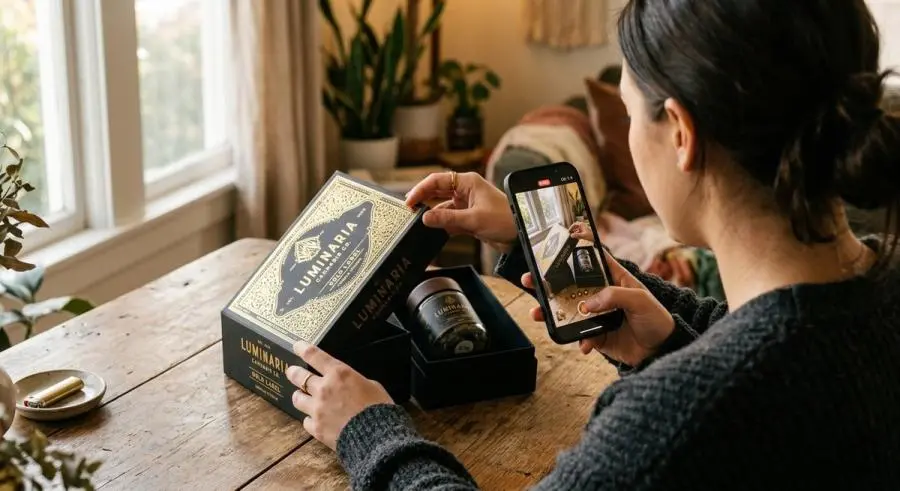
5.2 Design for the Camera — Packaging as Content Prop
Not all great packaging gets shared. The packaging that gets photographed shares specific visual traits:
- High color saturation: Neon, metallics, high-contrast color blocks perform best on Instagram and TikTok feeds.
- Reflective surfaces: Foil stamping, spot UV, metallic substrates catch light as the camera moves — creating dynamic visual effects static packaging cannot match.
- Interactive structures: Magnetic closures, sliding mechanisms, hinged lids invite demonstration — the exact content short-form video rewards.
Smart brands pre-bury "photo moments": a hidden message inside the lid, a mirror finish for selfies, a patterned inner liner that becomes a ready-made content background.
5.3 User-Generated Content ROI Model
Conservative math:
- 1,000 units shipped per month
- 5% share packaging on social media = 50 UGC posts
- Average reach per post: 500 organic impressions
- Monthly organic impressions: 25,000
- Equivalent paid media cost (CPM-based): $1,250/month
- Annual equivalent media value: $15,000
At 10,000 units per month, that scales to $150,000 per year — before viral or influencer amplification.
Three incentive mechanisms to drive UGC:
- In-package CTAs: "Tag us for a chance to be featured" cards inside every box.
- Purchase-to-post triggers: QR leads to a review-and-share flow with a discount on next purchase.
- Unboxing contests: Monthly prizes for the best customer unboxing photo — predictable cadence of content generation.
6. Measuring Success — KPIs for Packaging as a Media Channel
6.1 Direct Metrics
| Metric | How to Measure | Benchmark (2026) |
|---|---|---|
| QR scan rate | QR platform analytics | 10–15% (internal) |
| NFC read rate | NFC tag dashboard | 8–12% of tagged units |
| UGC volume | Hashtag monitoring + manual audit | 3–8% of units |
| Social reach | Total impressions across all UGC posts | Varies by brand size |
| Repurchase rate uplift | Pre/post packaging redesign comparison | +15–25% |
6.2 Indirect Metrics
- Brand search volume: A packaging refresh triggers 20–40% increase in branded Google search within 30–60 days — in-store discovery converts to online research.
- E-commerce conversion rate: Several cannabis brands report 10–20% conversion rate improvements post-redesign.
6.3 The Attribution Challenge
Isolating packaging's contribution from other activities is hard. Use three layers:
- Hard attribution (trackable): QR scans, NFC reads, unique discount codes on packaging.
- Soft attribution (correlational): Brand search volume changes pre vs. post packaging launch. Compare 30-day windows.
- Qualitative attribution (survey-based): In the post-scan digital experience, ask "Where did you first hear about us?" — include "saw packaging in-store" as an option.
Three layers give a defensible estimate without perfect last-click attribution.
7. Conclusion
Cannabis brands operate in the most restricted advertising environment of any legal consumer product category. That will not change in 2027 or 2028. The winners will be those who recognize that packaging is not just a line item in COGS — it is their most reliable, un-censorable, and engaging media channel.
Start with three steps:
-
Audit your packaging for shareability — Does it stop a customer in three seconds? Does the unboxing have a reveal worth filming? If not, you have a design gap.
-
Add at least one interactive element — Internal QR to lab results, NFC for authentication, or a structural mechanism (magnetic flap, sliding drawer) that invites demonstration. Give the customer a reason to engage beyond the first look.
-
Monitor and amplify UGC — Set up a branded hashtag, track mentions weekly, reshare customer content. Every reshare signals that their unboxing moment matters.
Looking ahead: By 2027, CMOs at leading cannabis brands will allocate 15–20% of packaging budget to "media-ized design" — structural features, digital integration, and surface treatments chosen specifically to generate social sharing. The brands that start now will own the unboxing moment — and the media value that comes with it.
References
- Pixels & Packs. "Maximizing Brand Loyalty with Custom Cannabis Packaging." February 2026. https://www.pixelsandpacks.co.uk/2026/02/19/custom-cannabis-packaging-6/
- Mylarmen. "Cannabis Brand Strategy Guide for 2026." https://mylarmen.com/cannabis-brand-strategy-guide-for-2026/
- Dragonchewer. "Pre-Roll Packaging Formats: The Complete Guide for Cannabis Brands and Dispensaries." 2026. https://dragonchewer.com/blogs/news/pre-roll-packaging-formats-the-complete-guide-for-cannabis-brands-and-dispensaries
- Cannabis Business Insights. "The Strategic Evolution of Cannabis Packaging." 2026. https://www.cannabisbusinessinsights.com/news/the-strategic-evolution-of-cannabis-packaging-nwid-577.html
- Cannabis Business Insights APAC. "Packaging Innovation Driving Growth in the Cannabis Industry." 2026. https://www.cannabisbusinessinsightsapac.com/news/packaging-innovation-driving-growth-in-the-cannabis-industry-nwid-615.html