Introduction
If you source Child-Resistant Packaging for a cannabis brand, you have likely asked one question: "Does it pass ASTM D3475?" That is the wrong question. The right question is: "Which CR mechanism best fits my package format, target customer, volume, and budget?"
The global cannabis packaging market was valued at $2.9 billion in 2024 and is projected to reach $9.7 billion by 2030 — a compound annual growth rate of 22.2%. CR compliance is the single most important regulatory requirement across every legal market. But passing the child test is table stakes. The real competitive differentiator is choosing the right CR mechanism — and most brands make that choice with remarkably little data.
Three mechanisms dominate cannabis packaging in 2026:
- Push-and-turn: The industry workhorse. Used on the majority of glass and plastic jars for flower, edibles, and concentrates. The consumer presses down while twisting — a dual-action that young children cannot coordinate.
- Pinch-and-slide: The fastest-growing alternative. The user squeezes two side tabs and slides the lid forward. Dominant in paper tubes and slide boxes, increasingly adopted for vape and pre-roll packaging.
- Squeeze-and-pull: Niche but important for flexible formats. The user compresses the package body while pulling the cap upward. Found mainly on mylar bags with CR zippers and certain flexible pouches.
Each mechanism makes a different trade-off across four dimensions: child-resistance reliability, adult usability, per-unit cost, and brand perception. The choice affects not just compliance — it affects return rates, customer satisfaction, production efficiency, and sustainability options.
This guide breaks down the engineering, testing data, cost structure, and user experience of each mechanism, so brand owners can make an informed decision rather than defaulting to whatever their supplier stocks.
The Three Mechanisms — How They Work and Where They Excel
Push-and-Turn: The Industry Standard
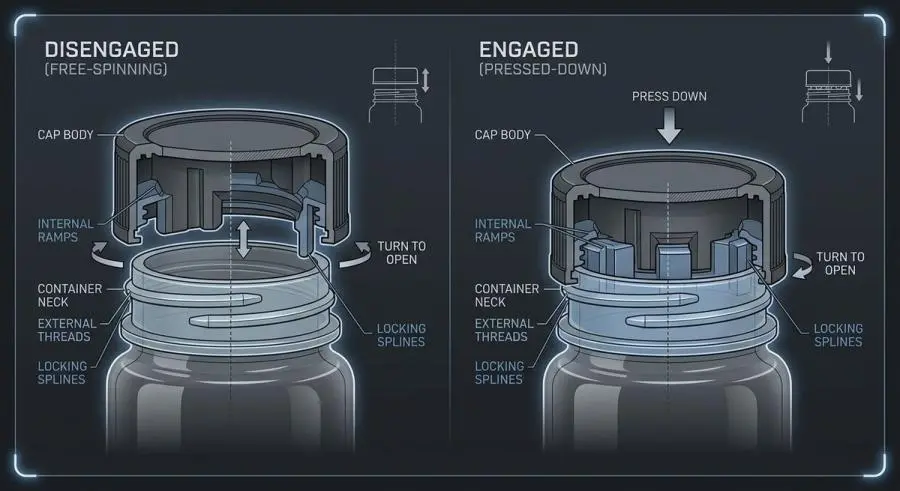
Push-and-turn is the most widely used CR mechanism in cannabis packaging, found on approximately 70% of CR-compliant rigid containers. The user applies downward pressure on the cap while rotating it counterclockwise. Two independent motions — axial compression and rotational torque — must occur simultaneously, which children under five cannot reliably coordinate.
The cap contains internal ramps or splines that engage only when the cap is pressed down. In the resting position, the ramps are disengaged, causing the cap to spin freely without opening. This mechanical simplicity explains why push-and-turn has dominated for decades: it is inexpensive to mold, easy to integrate, and well-understood by consumers and regulators alike.
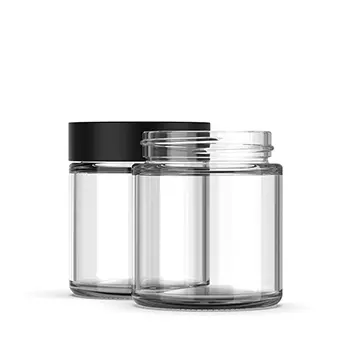
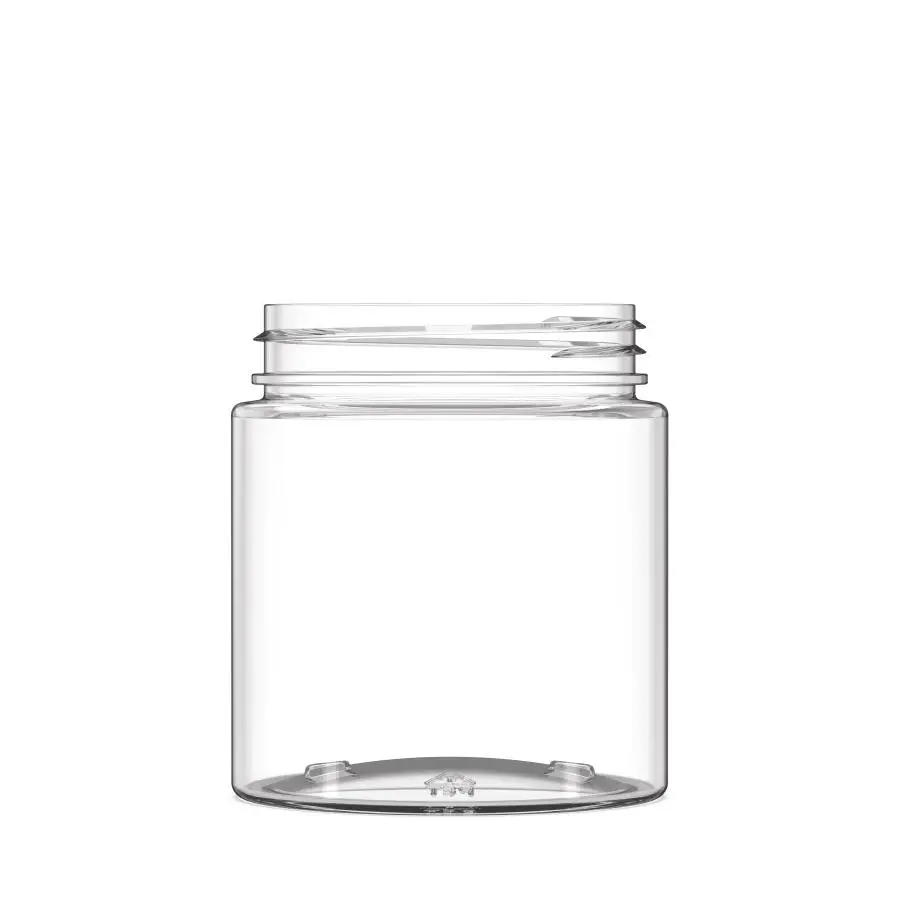
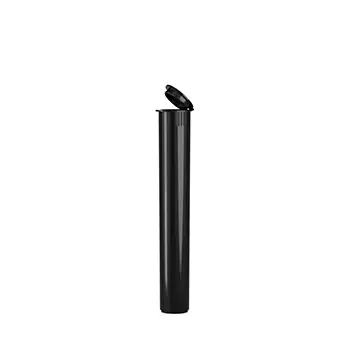
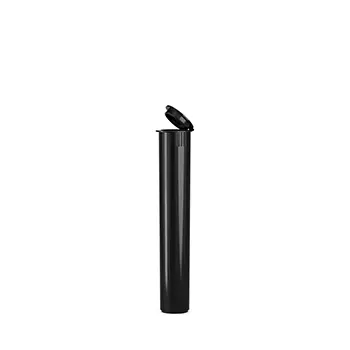
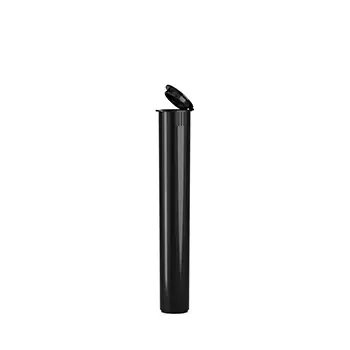
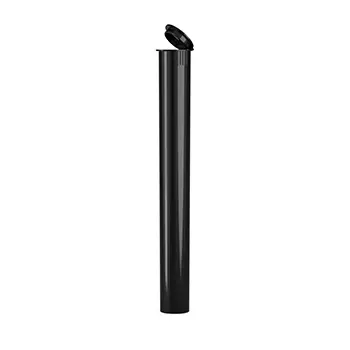
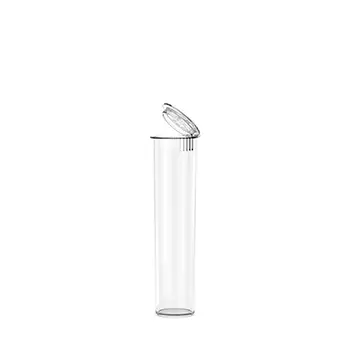
Applications: Glass jars for flower, plastic jars for edibles and concentrates, pre-roll tubes, vape cartridge packages.
Advantages: - Lowest tooling cost: $3,000–$8,000 per mold cavity - Widest supplier base: hundreds of qualified molders globally - Consumers already know the motion — zero education required - Compatible with glass, plastic, and metal container bodies
Disadvantages: - Highest torque-related complaints: consumers with arthritis or reduced grip strength struggle to generate the required downward force - Commoditized: difficult to differentiate through the cap alone - Torque consistency requires ongoing quality control: 5–15 in-lbs is the typical acceptable range, and drifting outside it causes either child-safety failures or adult-usability complaints
Pinch-and-Slide: The Rising Star
Pinch-and-slide mechanisms require the user to squeeze two tabs (typically located on opposite sides of the cap or package) while sliding the lid horizontally or vertically. The squeezing action compresses internal springs or flexures that release locking lugs, allowing the lid to move.
This mechanism has gained significant traction in cannabis packaging since 2023, particularly for paper tubes and slide boxes. It does not require rotational torque, making it significantly easier for older adults and individuals with limited hand strength to operate.
Applications: Paper pre-roll tubes, slide boxes, vape cartridge packaging, some concentrate containers.
Advantages: - Highest CRSF (Child-Resistant Senior-Friendly) scores among rigid CR mechanisms - Intuitive: adults naturally squeeze before sliding - Works naturally with paper-based and recyclable tube formats - Lower perceived "effort" compared to push-and-turn in consumer testing
Disadvantages: - Higher tooling cost: $8,000–$15,000 per cavity due to more complex mold geometry with internal springs and flexures - Fewer qualified suppliers: approximately 30–40% fewer than push-and-turn - Longer lead time: 8–12 weeks for mold fabrication vs. 4–6 weeks for push-and-turn - Tab geometry must be precisely calibrated: too stiff and adults cannot squeeze, too soft and children can defeat it
Squeeze-and-Pull: The Niche Contender
Squeeze-and-pull mechanisms are the least common of the three, but they fill an important niche: flexible packaging. The user squeezes the package body (typically a mylar bag or flexible pouch) to create internal pressure or release a locking tab, then pulls the cap or zipper open.
The mechanism is often integrated into CR zippers for mylar bags or designed as a squeeze-to-release cap on flexible tubes. Its strength is also its limitation: it only works with soft-sided packaging that deforms under hand pressure.
Applications: Child-resistant mylar bag zippers, flexible stand-up pouches, certain concentrate tubes.
Advantages: - The only CR mechanism that works natively with flexible packaging formats - No rigid cap required — reduces total component count for pouches - Can be integrated into resealable zippers, adding CR functionality without changing package format
Disadvantages: - Limited to flexible formats — not applicable to jars, tubes, or boxes - Inconsistent force transmission: flexible package deformation varies with fill level, film stiffness, and temperature - Lower perceived premium feel compared to rigid CR mechanisms - Smaller supplier base and shorter track record in ASTM testing
ASTM D3475 Testing — What the Numbers Actually Mean
How the Protocol Works
ASTM D3475 is the standard classification system for child-resistant packages. The testing protocol involves two phases:
Child Test: 200 children aged 42 to 51 months participate. They are given the package for two 5-minute sequential test periods. In the first period, they receive no demonstration. In the second, they are shown how to open it. The pass requirement: at least 85% of children must be unable to open the package in the first period, and at least 80% must be unable to open it after demonstration.
Adult Test: 100 adults aged 50 to 70 with no cognitive or physical impairments participate. They receive the package with written instructions only — no verbal or visual demonstration. At least 90% must be able to open and properly resecure the package within 5 minutes.
Common Failure Modes in Testing
Each mechanism has characteristic failure patterns:
Push-and-turn failures: The most common failure is observational learning. In group testing settings, children watch peers operate the mechanism and replicate the motion. This is particularly problematic with push-and-turn because the motion is highly visible and easy to imitate. Solutions include reducing cap diameter (harder for small hands to grip) and increasing required torque — but both changes reduce adult usability.
Pinch-and-slide failures: The most common failure is insufficient pinch force differentiation. If the required squeeze force is too close to what a child can generate, a significant percentage will open it. If it is too high, adults fail the usability test. The acceptable range is typically 8–15 Newtons of pinch force — a narrow window that requires precise mold calibration.
Squeeze-and-pull failures: The challenge is consistency. Flexible packaging deforms differently depending on fill level, ambient temperature, and film stiffness. A package that passes ASTM at 72°F with a full fill may fail at 50°F with a half-full fill. This variability makes squeeze-and-pull the most difficult mechanism to certify consistently.
The CRSF Paradox — Making CR Packaging Usable for Seniors
The fastest-growing demographic in cannabis is adults aged 55 and older. According to Brightfield Group's 2025 consumer survey, this segment now accounts for approximately 25% of legal cannabis purchases in the United States — and the percentage is rising as boomers replace Gen X as the largest generational cohort.
This creates a contradiction: CR packaging must be hard enough for a 3-year-old to open but easy enough for a 70-year-old with arthritis to open. The term "CRSF" (Child-Resistant Senior-Friendly) has emerged to describe mechanisms that satisfy both requirements.

Pinch-and-slide consistently achieves the highest CRSF ratings among rigid CR mechanisms because the squeezing motion uses different muscle groups than those affected by typical arthritis patterns. Push-and-turn can be improved for senior usability by: - Increasing cap diameter to 53mm or larger (better mechanical leverage) - Adding textured grip surfaces (knurling, elastomeric overmolding) - Reducing required torque to the lower end of the acceptable range (5–8 in-lbs)
Cost Analysis — Mechanism Cost by Package Format and Volume
Tooling Cost Comparison
The mold is the single largest upfront investment for a custom CR package. Costs vary significantly by mechanism complexity:
| Mechanism | Mold Cost per Cavity | Lead Time | Minimum Viable Volume |
|---|---|---|---|
| Push-and-turn | $3,000–$8,000 | 4–6 weeks | Any volume |
| Pinch-and-slide | $8,000–$15,000 | 8–12 weeks | >50,000 units |
| Squeeze-and-pull | $5,000–$12,000 | 6–10 weeks | >30,000 units |
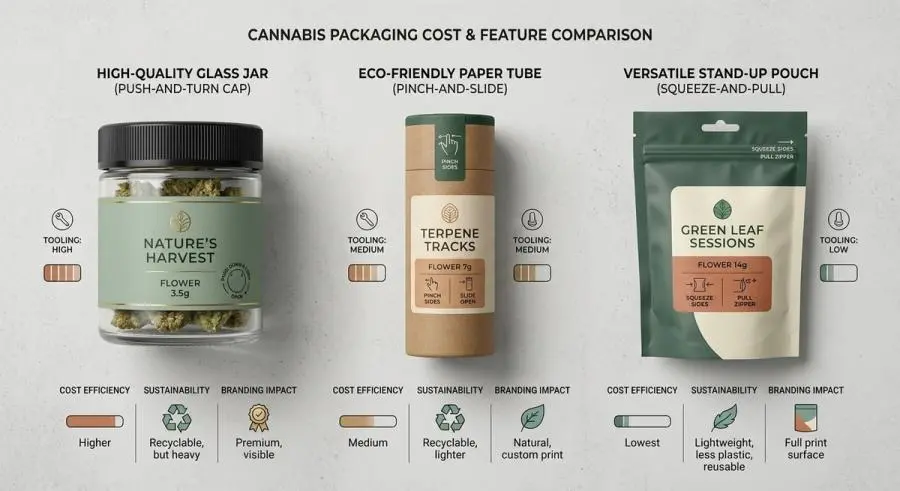
The gap between push-and-turn and pinch-and-slide tooling is substantial — roughly 2–3x for the initial investment. However, this gap narrows at high volumes, and pinch-and-slide often achieves lower per-unit costs at scale because the assembly process is simpler (fewer components to source and join).
Per-Unit Cost at Scale
At 10,000-unit order quantities (typical for a growth-stage brand launching a new SKU):
- Push-and-turn jar (8oz, PP body + PP cap + liner): $0.22–$0.38 per unit
- Pinch-and-slide paper tube (pre-roll, 5-pack): $0.15–$0.28 per unit
- Squeeze-and-pull CR pouch (mylar bag with CR zipper): $0.13–$0.25 per unit
The key insight: pinch-and-slide paper tubes are often cheaper per unit than push-and-turn jars at equivalent volumes, despite higher tooling costs. This is because paper tubes use less material, require no separate liner, and have simpler assembly.
Hidden Costs
Beyond tooling and unit pricing, three hidden costs affect the total cost of ownership:
Quality assurance: Push-and-turn requires ongoing torque verification. Caps must be tested at defined intervals to ensure the applied torque stays within the 5–15 in-lbs window. Out-of-spec torque is the leading cause of field failures and consumer complaints.
Return rates: Consumer complaints about CR difficulty vary by mechanism. Industry data suggests push-and-turn generates 2–3x more accessibility-related complaints than pinch-and-slide, particularly among consumers over 55.
Supplier qualification: Pinch-and-slide mechanisms have approximately 60–70% fewer qualified suppliers globally. Brands that choose this mechanism face longer sourcing timelines and less pricing leverage.
User Experience — Consumer Preferences and Pain Points
What Consumers Actually Think
Consumer satisfaction with CR packaging varies significantly by mechanism, age group, and physical ability:
Push-and-turn: Consumers over 50 report the highest frustration levels. Common complaints include "I can't get enough grip on the cap" and "I have to ask my spouse to open it." Younger consumers (21–35) generally find push-and-turn acceptable, though many note that some caps require "too much force."
Pinch-and-slide: This mechanism receives the highest satisfaction scores across all age groups in 2025–2026 consumer surveys. Adults over 60 specifically comment that the squeezing motion feels more natural and requires less effort than twisting. The mechanism is also perceived as "more modern" and "innovative" in focus groups.
Squeeze-and-pull: Satisfaction is mixed. Consumers appreciate the convenience for on-the-go use, particularly for pre-roll pouches and edible bags. But some express concern that the package "doesn't feel secure" — the flexible body deforms during squeezing, creating a perception of fragility.
The Unboxing Experience and Brand Perception
CR mechanism choice directly affects how consumers perceive a brand's quality and positioning:
Mass-market brands using standard push-and-turn plastic jars signal affordability and compliance — nothing more. Premium brands investing in custom push-and-turn caps with metal overmolding, larger diameters, and textured surfaces communicate quality through the weight and feel of the closure.
Pinch-and-slide on paper tubes has become associated with sustainability and innovation. Brands using this mechanism — particularly those combining paper tubes with FSC-certified materials — receive higher scores on environmental responsibility in consumer surveys.
Squeeze-and-pull is format-dependent: on a mylar bag, it is unremarkable; on a custom flexible pouch with premium printing, it can feel modern and convenient.
Accessibility and Inclusive Design
The aging cannabis consumer base makes inclusive design a business imperative, not a regulatory checkbox. Key data points:
- Adults 55+ are the fastest-growing cannabis demographic in the US, projected to reach 30% of consumers by 2028
- Approximately 25% of adults over 55 have arthritis or reduced hand strength
- CRSF-rated packaging is not currently required by federal law, but three states (California, Colorado, Massachusetts) have introduced bills or guidance recommending senior-friendly design
Pinch-and-slide is widely considered the most senior-friendly rigid CR option because the squeezing motion relies on larger muscle groups and does not require the finger dexterity needed for push-and-turn. Brands targeting the 55+ demographic — particularly in wellness and medical cannabis segments — are increasingly adopting pinch-and-slide as their primary CR mechanism.
Future Trends — Mono-Material CR, Smart Packaging, and Regulatory Convergence
Mono-Material Compatible CR Mechanisms
As the packaging industry moves toward mono-material designs for recyclability, CR mechanisms face a material challenge. Traditional push-and-turn caps often require metal springs or silicone gaskets — both incompatible with single-polymer recycling.
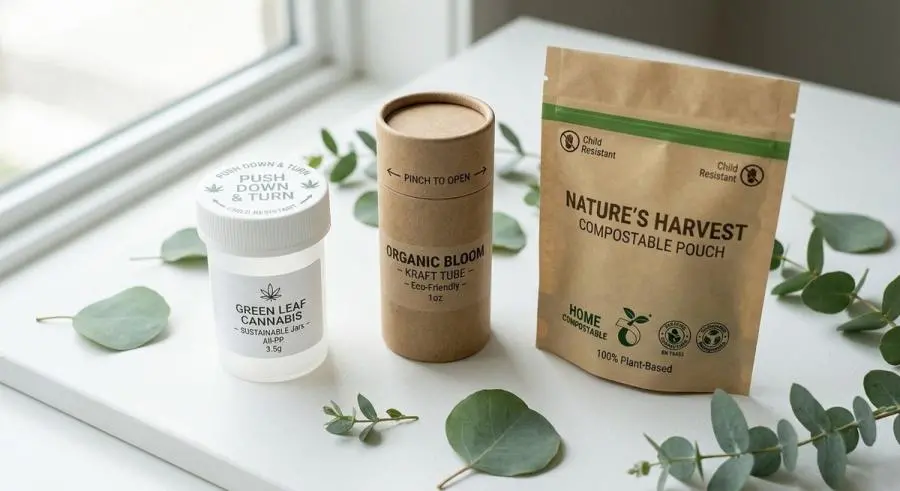
Three developments to watch:
-
All-PP linerless push-and-turn caps: Several Chinese and US molders now offer PP-only CR caps with integrated compression seals. These are recyclable in the PP stream and eliminate the need for separate liners. Tooling costs remain higher than standard CR caps, but the gap is narrowing.
-
All-paper pinch-and-slide tubes: The holy grail of sustainable CR packaging. At least two European manufacturers have demonstrated paper-only pinch-and-slide tubes that pass ASTM D3475. Commercial production is expected by 2027.
-
Biodegradable zippers for flexible pouches: Squeeze-and-pull CR zippers using PLA-based materials are in development, targeting compostable certification by 2028.
Smart Packaging Integration
CR caps are becoming a platform for digital features. NFC tags embedded in push-and-turn caps now enable consumers to tap their phone to:
- View batch-level Certificates of Analysis and lab test results
- Authenticate product and confirm it has not been tampered with
- Access dosage guidance and usage instructions
The mechanism choice affects NFC integration. Push-and-turn caps provide a flat top surface ideal for NFC tag placement. Pinch-and-slide mechanisms require the tag to be embedded in the body of the package rather than the lid, as the sliding action can shear off a top-mounted tag.
The cost premium for NFC-enabled CR caps ranges from $0.08–$0.28 per unit depending on volume and encryption requirements.
Regulatory Trajectory
Three regulatory trends will shape CR mechanism selection over the next three years:
-
Senior-friendly mandates: California AB 1201 (proposed) would require CR packaging for medicinal cannabis to pass both child and senior usability testing. If passed, this would effectively mandate CRSF-rated mechanisms such as pinch-and-slide for the California medicinal market.
-
EU PPWR and material restrictions: The EU's Packaging and Packaging Waste Regulation will restrict multi-material CR mechanisms in European markets by 2030. Brands exporting to the EU need mono-material compatible CR solutions.
-
Standardized testing reciprocity: ASTM International is working toward mutual recognition of CR test results across jurisdictions, which could reduce testing costs for brands operating in multiple states or countries.
Conclusion
No single CR mechanism is universally superior. The right choice depends on your package format, production volume, target demographic, and brand positioning.
Push-and-turn is the safe default: proven, widely available, and cost-effective for any volume. It works best for rigid formats targeting a general audience, where the cap can be optimized for larger diameter and lower torque.
Pinch-and-slide is the strategic differentiator: higher upfront tooling cost but better senior usability, stronger sustainability story for paper formats, and higher consumer satisfaction scores. It is the right choice for brands targeting the 55+ demographic or positioning on sustainability.
Squeeze-and-pull is the format-specific specialist: essential for flexible pouches and mylar bags where rigid caps cannot work, but limited outside those applications.
Before committing to any mechanism, request ASTM D3475 test reports from your supplier for the specific package format and closure combination you intend to use. Do not assume that "CR certified" on a similar package means the same mechanism will pass on yours. The test certifies the system, not the component.
And ask your supplier one more question: "What is your CRSF rating?" The answer will tell you whether your packaging serves your oldest, fastest-growing customers — or frustrates them.
References
- ASTM International. ASTM D3475-20 Standard Classification of Child-Resistant Packages. https://www.astm.org/d3475-20.html
- Consumer Product Safety Commission. Poison Prevention Packaging Act Requirements. https://www.cpsc.gov/Regulations-Laws--Standards/Regulations/Packaging
- Brightfield Group. 2025 US Cannabis Consumer Trends Report. https://www.brightfieldgroup.com/
- Pixels & Packs. Creating Child-Resistant Cannabis Packaging That Doesn't Compromise Design (2026). https://www.pixelsandpacks.co.uk/2026/02/24/cannabis-packaging-9/