Introduction
Shelf life became a compliance metric in 2026. Regulators across North America now expect cannabis brands to document potency stability across a product's stated shelf life, and the packaging barrier is the variable that makes or breaks that data.
OTR (oxygen transmission rate) determines how fast cannabinoids and terpenes degrade. Standard LDPE film transmits up to 500 cc of oxygen per 100 square inches per day. EVOH (Ethylene Vinyl Alcohol) copolymer delivers an OTR as low as 0.005–0.12 cc under dry conditions — a 4,000x difference.
The catch: EVOH loses barrier performance as humidity rises. Correct material stack design isn't optional — it's the difference between a compliant package and a failed stability test.
EVOH Chemistry — Why It Dominates Oxygen Barrier Performance
The Copolymer Structure That Blocks Oxygen
EVOH is a semi-crystalline thermoplastic copolymer made by hydrolyzing ethylene-vinyl acetate (EVA). The oxygen-blocking mechanism is straightforward: strong hydrogen bonds between hydroxyl groups in the polymer chains create a dense crystalline matrix that oxygen molecules cannot penetrate efficiently.
Ethylene content is the tuning parameter. Standard grades range from 27% to 48%:
| Ethylene Content | Crystallinity | OTR (cc·20μm/m²·24hr·atm) | Flexibility | Best Application |
|---|---|---|---|---|
| 27% | Highest | 0.1–0.5 | Brittle | Maximum barrier, rigid structures |
| 32% | High | 0.5–1.0 | Moderate | General high-barrier film |
| 38% | Medium | 1.0–3.0 | Good | Flexible packaging balance |
| 44% | Low | 3.0–5.0 | Excellent | Thermoforming, deep-draw |
Quantitative OTR Performance vs. Alternative Barriers
At 0% RH and 23°C, EVOH with 32% ethylene delivers an OTR of approximately 0.5 cc·20μm/m²·24hr·atm.
| Barrier Material | OTR Range (cc/100 in²/24hr) | Cost Index | Moisture Sensitivity |
|---|---|---|---|
| EVOH (32%, dry) | 0.005–0.12 | 1.0x (baseline) | High |
| PVDC Coating | 0.5–3.0 | 0.7x | Low |
| Metallized PET (alumina) | 0.1–0.5 | 0.8x | Low |
| Aluminum Foil (7μm) | <0.01 | 0.6x | None |
| Nylon (PA6) | 30–80 | 0.5x | Moderate |
| LDPE | 300–500 | 0.3x | Low |
EVOH is the only transparent polymer that approaches foil-level barrier. That makes it the default choice for windowed cannabis pouches where product visibility matters.
The Terpene Preservation Advantage
EVOH also delivers exceptional aroma barrier. Headspace analysis data shows EVOH-based packaging retains monoterpenes (myrcene, limonene, pinene) at >85% of initial concentration after 6 months. PVDC-coated films: <60%. Standard polyolefin structures: <30%.
The Humidity Trap — EVOH's Achilles' Heel and Engineering Solutions
Why Humidity Destroys EVOH Barrier Performance
EVOH's barrier depends on the hydrogen bond network between polymer chains. Water molecules plasticize the structure by interrupting these bonds, increasing free volume and letting oxygen through.
| Relative Humidity | OTR Multiplier (vs. 0% RH baseline) | Effective OTR (cc/100 in²/24hr) |
|---|---|---|
| 0% | 1.0x | 0.01 |
| 30% | 1.5x | 0.015 |
| 60% | 5x | 0.05 |
| 80% | 20x | 0.20 |
| 95% | 50–100x | 0.50–1.00 |
At 95% RH, EVOH performs no better than metallized film — the advantage that justified its selection is gone.
The Encapsulation Solution
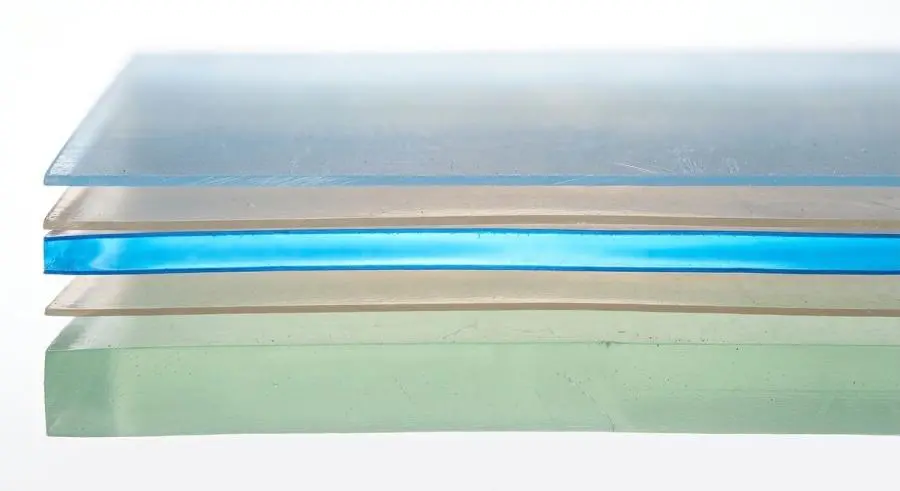
The fix: sandwich the EVOH layer between moisture-resistant polyolefin layers (PE or PP). A typical multi-layer structure:
Outer layer (PE/PP): Structural integrity, print surface, external moisture barrier
EVOH core: Oxygen barrier
Tie layers (anhydride-modified polyolefin): Adhesion between EVOH and PE/PP
Inner sealant layer (PE/CPP): Heat-sealable, product contact, internal moisture barrier
Layer Stack Design Options
| Structure | Total Thickness | OTR (cc/m²/24hr) | WVTR (g/m²/24hr) | Cost Index |
|---|---|---|---|---|
| 3-layer: PE/tie/EVOH | 60–80μm | 3–5 | 5–8 | 1.0x |
| 5-layer: PE/tie/EVOH/tie/PE | 80–120μm | 1–3 | 3–5 | 1.3x |
| 7-layer: PE/tie/EVOH/tie/EVOH/tie/PE | 100–150μm | <1 | <2 | 1.6x |
| 5-layer + metallized PET | 90–130μm | <0.5 | <1 | 1.8x |
The 5-layer structure is the most common choice for cannabis flower packaging — barrier, machinability, and cost in balance. The 7-layer is for long-duration storage (18+ months) or high-humidity environments.
Real-World Validation
TerpeneFresh Labs compared 5-layer EVOH pouches against metallized PET pouches storing cannabis flower at 62% RH over 12 months:
Terpene retention: EVOH maintained 82% vs. 61% for metallized PET at 12 months
Moisture stability: Both held ±2% RH, but EVOH reached equilibrium faster
THC degradation: 3.2% loss in EVOH vs. 7.8% in metallized PET
Bottom line: properly encapsulated EVOH neutralizes humidity sensitivity within the 30–65% RH range typical of cannabis storage.
2026 Compliance Landscape — Potency Stability Documentation
The New Regulatory Reality
Multiple states and Canadian regulators are moving toward requiring potency stability data matched to labeled shelf life. This makes packaging a compliance-critical component.
Key 2026 developments:
California: Proposed DCC regulations require quarterly stability testing for products claiming >12-month shelf life. EVOH-packaged products pass at significantly higher rates.
Michigan: New rules mandate CR Packaging that maintains <10% THC degradation over stated shelf life. Non-barrier options can't meet this.
Canada: Health Canada's amended Cannabis Regulations cite "package integrity" as a factor in potency labeling compliance.
How Barrier Performance Drives Compliance Outcomes
THC degrades to CBN via oxidation. The reaction rate is proportional to oxygen exposure.
| Packaging Type | OTR (cc/pkg/day) | THC Loss at 6 months | THC Loss at 12 months | Compliance Risk |
|---|---|---|---|---|
| LDPE/PP (no barrier) | >50 | 8–12% | 15–20% | High |
| PVDC-coated | 5–15 | 3–5% | 6–10% | Moderate |
| Metallized PET | 1–3 | 2–3% | 4–7% | Low |
| EVOH 5-layer | 0.1–0.5 | <2% | 3–4% | Very Low |
| Aluminum Foil | <0.01 | <1% | <2% | Negligible |
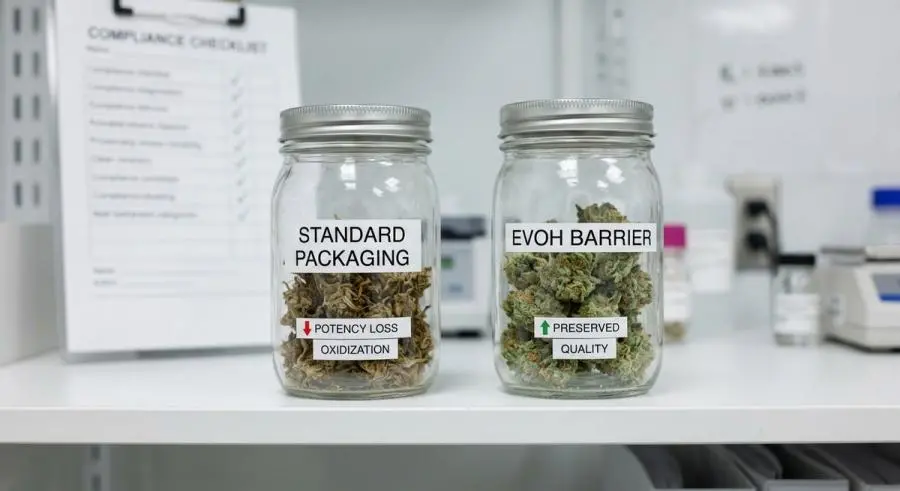
Brands using EVOH can document THC degradation within 5–10% over 12 months. That's a critical advantage as regulators tighten scrutiny.
Testing Protocol Requirements
ASTM F1980 (Standard Guide for Accelerated Aging) is increasingly referenced for cannabis stability testing:
Control: 25 units at labeled storage conditions (20–25°C, 60% RH)
Accelerated: 25 units at 50–60°C, controlled humidity
Timepoints: 0, 30, 60, 90 days accelerated ≈ 6, 12, 18 months real-time
Measurements: Potency, terpene profile, moisture content, microbial stability
EVOH-packaged products consistently show <5% potency variance across accelerated aging. Standard barrier films: 10–15%.
EVOH in the Sustainability Paradox
The Multi-Material Recycling Challenge
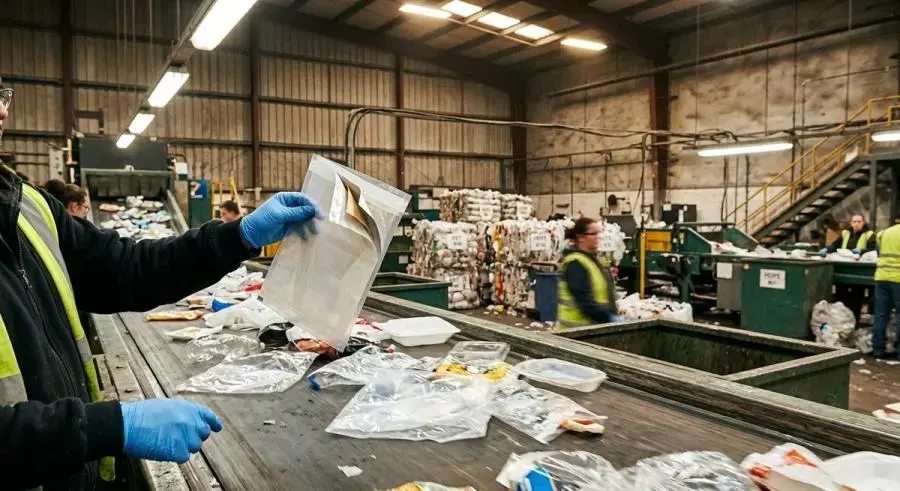
EVOH's barrier requires multi-material structures — and those create recycling problems. A typical 5-layer EVOH pouch combines 3–4 polymer types that MRFs cannot easily separate.
How2Recycle ratings:
| Structure | How2Recycle Rating | Reason |
|---|---|---|
| Mono-material PE | Widely Recyclable | Standard PE stream |
| PE/EVOH/PE (EVOH <5%) | Check Locally | Low EVOH content, some facilities accept |
| PE/EVOH/PE (EVOH >5%) | Not Yet Recyclable | EVOH contaminates PE stream |
| PET/EVOH/PE | Not Yet Recyclable | Multi-polymer, non-separable |
| Aluminum foil laminate | Not Yet Recyclable | Metal-polymer composite |
Emerging Solutions: Compostable EVOH Laminates
The most promising 2026 development: EVOH integrated into compostable laminates. Combining EVOH with PLA outer layer, PBS sealant, and coated cellulose substrate achieves industrial compostability certification (EN 13432) while maintaining EVOH-level oxygen barrier. The tradeoff: lower moisture barrier, limiting these to short-shelf-life products (<6 months).
The Mono-Material Alternative
Keeping EVOH content below 5% of total film weight. At this level, EVOH disperses in the PE matrix during recycling without visible contamination or significant property loss.
Early trial results:
<5% EVOH retains ~70% of the oxygen barrier of a full-thickness layer
Recycled PE with <5% EVOH shows <10% property loss vs. virgin PE
These structures qualify for "Check Locally" How2Recycle — a step up from "Not Yet Recyclable"
Practical Decision Framework for Cannabis Brands
Matching Barrier Structure to Product Type
| Product Type | Target Shelf Life | Recommended Structure | OTR Target | Budget |
|---|---|---|---|---|
| Flower (premium) | 18–24 months | 7-layer EVOH or EVOH + metallized | <1 cc/pkg/day | $$$ |
| Flower (value) | 12 months | 5-layer EVOH | 1–3 cc/pkg/day | $$ |
| Pre-rolls | 12 months | 5-layer EVOH | 1–3 cc/pkg/day | $$ |
| Concentrates | 18–24 months | Aluminum foil laminate | <0.1 cc/pkg/day | $$ |
| Edibles | 9–12 months | 3-layer EVOH or metallized PET | 3–5 cc/pkg/day | $ |
| Vape cartridges | 18–24 months | EVOH + metallized PET | <0.5 cc/pkg/day | $$$ |
Cost-Benefit Analysis by Shelf-Life Target
For a mid-size brand at 100,000 units/year:
| Target Shelf Life | Best Option | Annual Cost | Compliance Confidence |
|---|---|---|---|
| 6 months | Metallized PET | $28K | Moderate |
| 12 months | 5-layer EVOH | $42K | High |
| 18 months | 7-layer EVOH | $55K | Very High |
| 24 months | EVOH + metallized | $65K | Near-certain |
Upgrading from metallized PET to 5-layer EVOH adds $0.14/unit — $14K/year at 100K units. Against a product recall or compliance failure, that premium is negligible.

Supplier Qualification Checklist
EVOH grade and thickness: Ethylene content? Gauge? (32% at 15–20μm is the cannabis sweet spot)
Encapsulation design: How is EVOH protected from humidity? Outer and inner layer thickness?
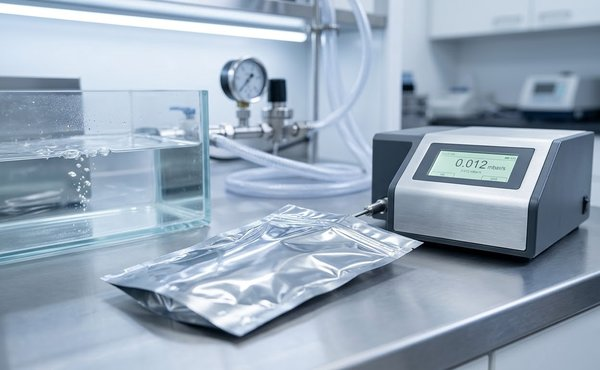
OTR and WVTR data: Certified test reports (ASTM D3985, ASTM F1249) at both 0% RH and 65% RH
Sealant compatibility: Is the inner layer compatible with your product's oil/terpene profile? (CPP for oily concentrates)
Recycling status: How2Recycle rating? Take-back program?
Compliance docs: FDA 21 CFR migration data? ASTM D3475 CR certification for the complete structure?
Conclusion
EVOH remains the top-tier oxygen barrier for cannabis packaging in 2026 — near-foil OTR with transparency. Its humidity sensitivity is a solved engineering problem: 5-layer or 7-layer encapsulation neutralizes it within the cannabis storage humidity range.
As regulators tighten potency stability documentation, barrier choice becomes a compliance decision. Brands using properly designed EVOH laminates today won't need costly redesigns when the next round of regulations lands.
What's coming: nanocoating-enhanced EVOH films that cut required thickness by 30–40%, and mono-material PE structures with <5% EVOH that bridge barrier and recyclability. For now, the 5-layer EVOH structure is the gold standard — proven, cost-effective, compliance-ready.
Bottom line: Audit your packaging's OTR against your labeled shelf life. If the gap exceeds your compliance tolerance, EVOH is the upgrade that pays for itself the first time it saves a stability test.