Introduction
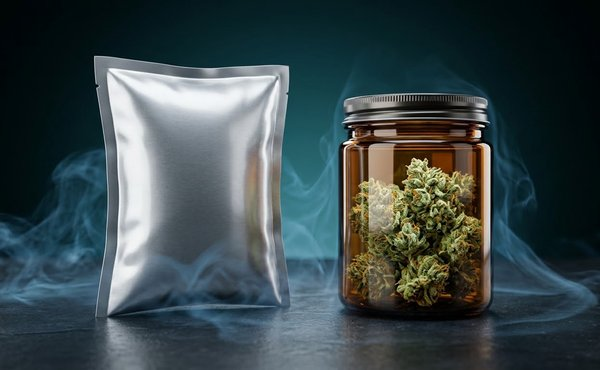
You've heard the pitch: "Switch to mono-material, and your pack becomes recyclable overnight." One polymer. One recycling stream. Circularity achieved.
The reality is messier.
Three regulatory forces are converging on cannabis packaging in 2026. The EU's PPWR, in force since February 2025, demands all packaging be recyclable by 2030. The UK Plastic Packaging Tax charges £210.82 per tonne on packaging with less than 30% recycled content. In the US, a patchwork of state-level EPR laws — California SB 54, Oregon's SB 582, Colorado's HB 22-1355 — each sets its own timeline and definition of "recyclable."
Mono-material is the most widely promoted answer. Replace PET/Al/PE laminates with a single polymer, and you eliminate the material incompatibility that makes flexible packaging hard to recycle.
But cannabis packaging has non-negotiable requirements that fight mono-material logic. Child-resistant closures need multi-part assemblies. High-barrier films need multiple functional layers to keep oxygen and moisture away from flower. Tamper-evidence adds seals, bands, adhesives — each a potential contaminant in the recycling stream.
One survey found that over 60% of "recyclable" claims on US dispensary shelves were technically inaccurate, often because a single incompatible component — a foam liner, a PET label on a PP jar, a mixed-material zipper — broke the mono-material condition.
This article is not here to tell you mono-material is a scam. It's a genuinely important design direction. But it's also not a simple swap. The difference between a pack that earns How2Recycle's "Widely Recyclable" badge and one that greenwashes its way onto a shelf often comes down to a single component costing less than a penny.
What Mono-Material Actually Means in Flexible Packaging
Definition & Key Polymer Families
Mono-material packaging means ≥95% of the total weight is a single polymer type, per How2Recycle and APR Design Guide guidance. Two polymers dominate cannabis packaging:
Polyethylene (PE): Good sealability, moderate barrier, wide MRF acceptance in film form. The default replacement for multi-layer stand-up pouches.
Polypropylene (PP): Higher heat resistance and stiffness. Preferred for rigid containers and child-resistant closures. Works if the entire assembly — body, cap, liner — stays within the PP family.
A "mono-material PE pouch" does not mean every molecule is PE. It means the film, sealant, inks, adhesives, and any attached components collectively meet the 95% threshold. That last 5% is where claims fall apart.
Common Failure Points
Industry audits consistently find the same culprits:
Non-PP liners in all-PP CR jars. A brand invests in a premium PP jar with a PP cap, then adds a PE foam or induction foil liner — and instantly loses mono-material status. Pixels & Packs (2026) called this "the #1 mistake" in cannabis mono-material packaging.
Zippers, valves, and tear tapes. Adding a resealable zipper (typically nylon) or a degassing valve (silicone + PE composite) introduces non-PE components that sortation equipment cannot separate.
Labels and adhesives. A PET label on a PE pouch is a common oversight. Washable adhesive labels exist but cost 2–3x standard stock and require adhesive chemistry compatible with the caustic wash process.
Induction seals. The aluminum foil layer in a standard induction seal is irreconcilable with mono-material recycling. Brands must choose linerless designs or all-PE foam seals.
Barrier Performance — The Core Technical Challenge
Cannabis flower requires OTR ≤1 cc/m²/day and WVTR ≤0.1 g/m²/day at 38°C/90% RH to preserve cannabinoids and terpenes for 6–12 months.
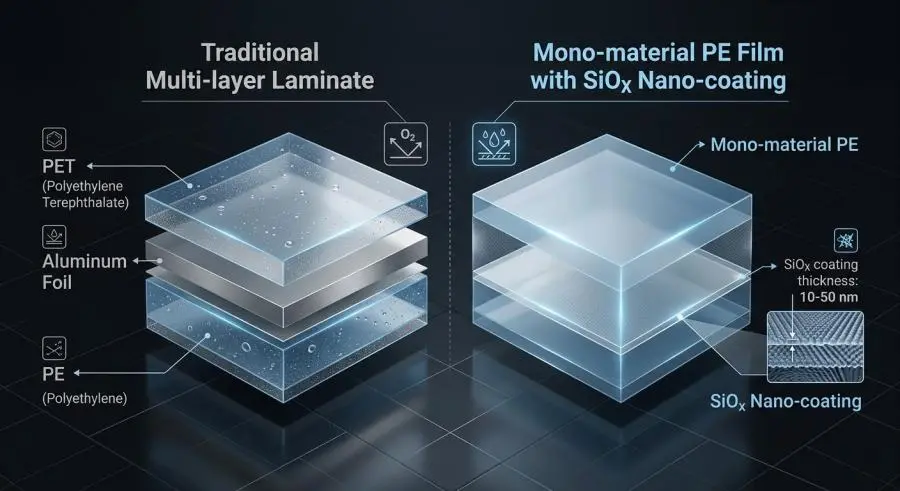
Traditional laminates achieve this trivially: PET provides structure and print surface, aluminum delivers absolute barrier, PE seals. The OTR of a 12µm PET / 9µm Al / 70µm PE laminate is effectively zero.
Replacing this with mono-material is difficult:
| Film Structure | OTR (cc/m²/day) | WVTR (g/m²/day) | Recyclable |
|---|---|---|---|
| PET12 / Al9 / PE70 | <0.01 | <0.01 | No |
| Mono-PE (100µm) | ~800 | ~12 | Yes |
| Mono-PE + SiOx coating (100µm) | 0.5–2.0 | 0.05–0.2 | Yes (conditional) |
| Mono-PE + EVOH layer (100µm) | 0.1–0.5 | 0.02–0.1 | Yes (design-for-recycling) |
SiOx-coated PE is the most viable alternative: a ~50nm silicon oxide layer vapor-deposited onto PE film provides glass-like barrier without compromising recyclability. At typical MRF dilution rates, the coating is too thin to affect the PE recycling stream.
The concept most brands miss: minimum viable barrier. If your product turns over in 3–6 months, you likely do not need foil-level barrier. A coated mono-PE solution with OTR of 1.0 cc/m²/day may be entirely adequate and fully recyclable. Over-engineering barrier "just in case" is the main reason cannabis packaging stays multi-material.
Regulatory Landscape — Driving Mono-Material Adoption
Regulation, not consumer demand, is the primary force pushing mono-material adoption. Three regimes converge on cannabis packaging, each with different timelines and enforcement.
EU PPWR
Entered into force February 2025. All packaging placed on the EU market must be recyclable by 2030, with interim recycled-content targets starting 2030 and 2040. Two provisions matter for cannabis:
Design for recycling: Member states apply eco-modulation fees. Mono-material qualifies for lower fees; multi-material laminates face surcharges.
Ban on over-packaging: Multi-layer structures not justified by protection or shelf-life requirements are effectively banned.
The consequence: any packaging imported from Chinese manufacturers for EU distribution must comply by 2030. Exporters offering only PET/Al/PE laminates without a mono-material alternative will lose European market access.
UK Plastic Packaging Tax
Effective April 2022, £210.82 per tonne on plastic packaging with less than 30% recycled content. Mono-material structures simplify compliance because single-stream recycling produces higher-quality recyclate, making it feasible to incorporate PCR into film. Multi-material laminates cannot be recycled back into food-grade film without significant degradation — "downcycling."
US State-Level Fragmentation
No federal packaging recycling law exists. Instead, a growing list of states has enacted producer-responsibility legislation:
| State | Law | Key Requirement | Timeline |
|---|---|---|---|
| California | SB 54 | All packaging recyclable or compostable | 2032 |
| Oregon | SB 582 | EPR eco-modulation fees by material | 2025 |
| Colorado | HB 22-1355 | Producer-funded recycling, material scoring | 2026 |
| Maine | LD 1541 | EPR with problematic materials list | 2026 |
| Minnesota | HF 3911 | Packaging EPR implementation | 2027 projected |
The paradox: CR compliance laws force multi-part, multi-material assemblies, while recycling laws punish exactly that complexity. A brand distributing in California faces two regulatory trajectories pulling in opposite directions.
Green Claims Scrutiny
In 2024–2025, the FTC sent warning letters to dozens of companies for unsubstantiated recycling claims. The EU's Directive on Empowering Consumers for the Green Transition (effective 2026) bans generic environmental claims without third-party certification. The UK CMA has made packaging claims a priority enforcement area.
Calling a pack "mono-material" is not the same as calling it "recyclable." Mono-material is necessary but not sufficient. Without How2Recycle certification or equivalent, a mono-material claim alone is marketing fluff — and increasingly, a litigation risk.
Cost & Feasibility — Mono-Material by Packaging Format
Flexible Pouches
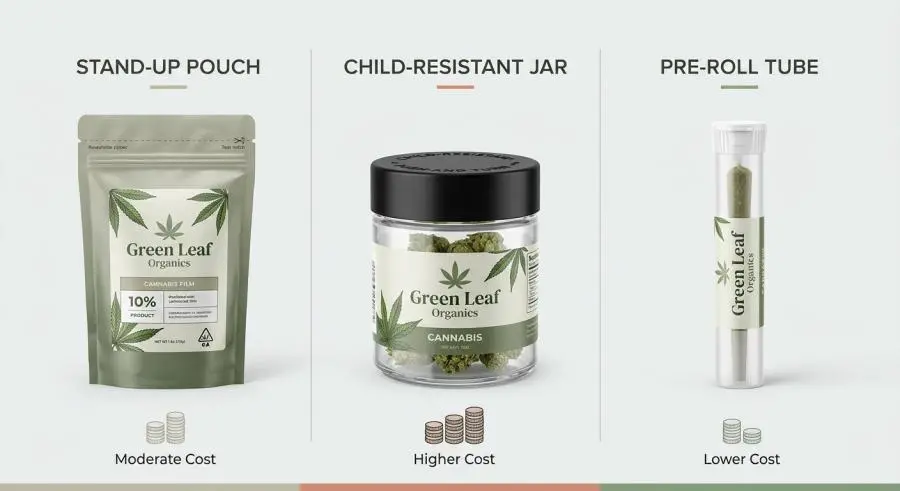
Stand-up pouches are the highest-volume flexible format in cannabis. The current standard — 12µm PET / 9µm Al / 70µm PE — costs £0.11–£0.24 per unit at 10,000 quantity (Pixels & Packs, 2026).
Switching to mono-PE + SiOx coating adds a 15–25% premium, putting the cost at roughly £0.13–£0.30 per unit. The premium comes from vacuum-deposition coating and lower manufacturing scale.
The unresolved issue: zippers and valves. A mono-PE pouch with a standard nylon zipper is no longer mono-material in practice. True mono-material pouches need all-PE zippers (available from Zip-Pak and a handful of others), costing roughly 30% more than standard zippers.
Child-Resistant Jars
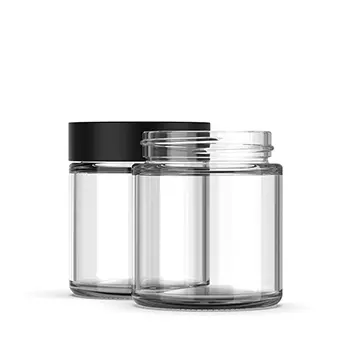
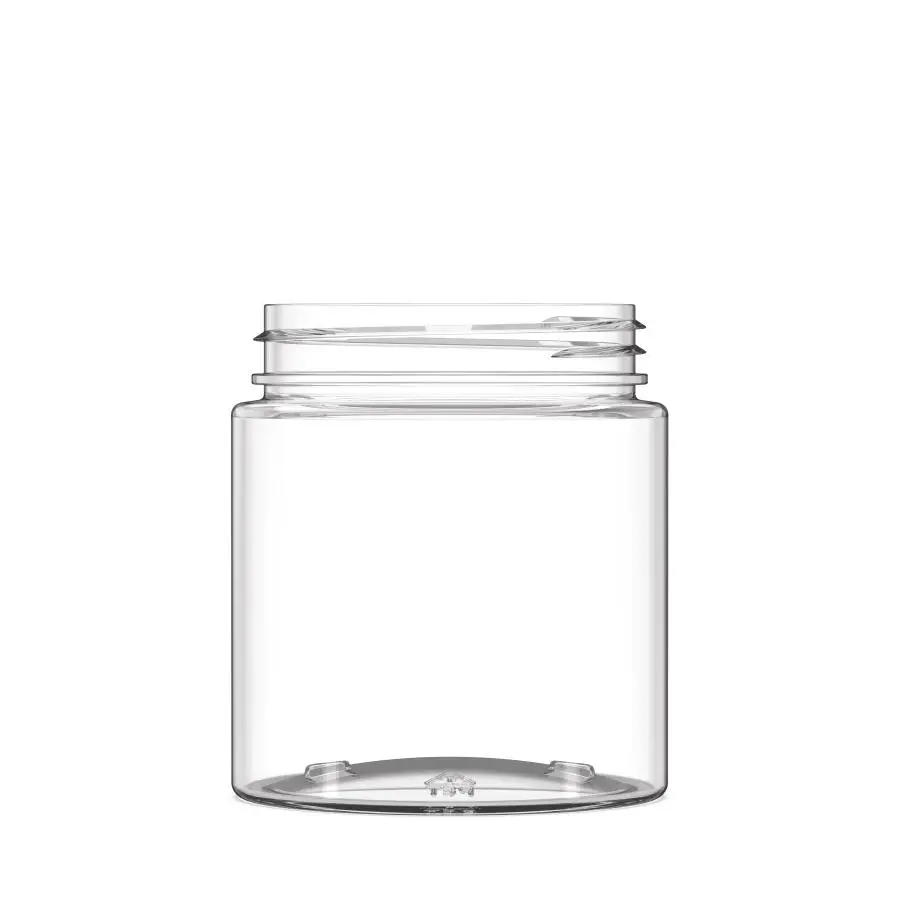
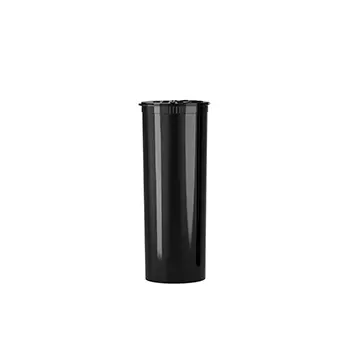
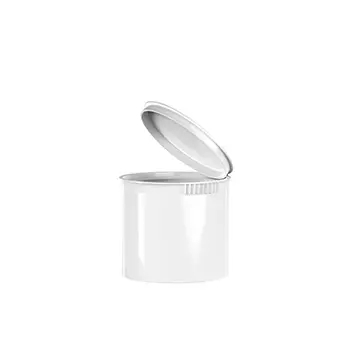
CR jars are the hardest mono-material target. A standard 8oz jar — PP body + PP cap + PE foam liner + PET label — costs £0.22–£0.38 at 10k quantity. The liner is the weak point.
Two pathways exist:
All-PP with PE foam liner: Replace the non-PP liner with PE foam bonded to the cap. Mechanically separable during grinding, keeping the PP stream clean. Incremental cost: +5–10% on the liner.
Linerless CR cap: A compression-seal gasket molded directly into the cap. Patented by ClosureLogic and Weatherchem. Tooling: $15,000–$25,000 per cavity. Per-unit cost drops below lined caps above 100,000 units, because there is one fewer component to source and assemble.
Pre-Roll Tubes & Vape Cartridge Packaging
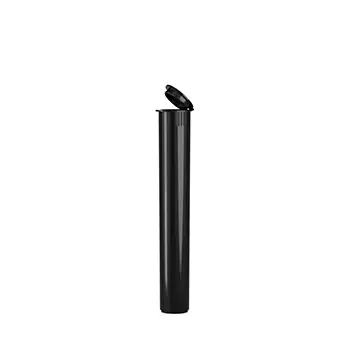
Paper tubes with plastic CR caps are inherently multi-material. The paper fraction degrades in the plastic wash; the plastic cap contaminates the paper stream.
Mono-PET tubes work for vape cartridges: a single PET tube with PET CR cap and PET liner, fully recyclable where PET bottle recycling exists. The limitation is barrier — PET's OTR of ~5 cc/m²/day suits short-shelf vape products but not long-term flower storage.
| Package Format | Traditional | Mono-Material | Premium | Fully Recyclable? |
|---|---|---|---|---|
| Stand-up pouch | £0.11–£0.24 | £0.13–£0.30 | +15–25% | Conditional* |
| CR jar (8oz) | £0.22–£0.38 | £0.24–£0.42 | +5–15% | Yes (linerless) |
| Pre-roll tube | £0.08–£0.18 | £0.10–£0.22 | +10–20% | Yes (all-PET) |
| *Depends on zipper/valve choice |
The Hidden Cost: Recycling Infrastructure
A mono-material pack that no MRF can process is a philosophical win and a practical failure. Most US MRFs cannot separate flexible PE from rigid PE in the same bale. Flexible packaging, even when mono-material, typically ends up in a "film" category with limited end-market demand.
According to The Recycling Partnership's 2025 survey, roughly 60% of US counties lack MRF capability to process flexible PE film. A mono-PE stand-up pouch that is technically recyclable will still go to landfill in the majority of US markets. The same pouch in Germany — where DSD's yellow bag system accepts all mono-material flexible packaging — would be recycled.
Mono-material is necessary but not sufficient. Brands serious about actual recycling need to map MRF infrastructure by state and align packaging decisions with where their products sell.
Real-World Brand Strategies — Case Studies
Success: A Canadian LP's Mono-PE Pouch Transition
In 2025, a British Columbia licensed producer replaced its PET/Al/PE stand-up pouch for dry flower with coated mono-PE. The driver was Canada's proposed Federal Plastic Registry and BC's RecycleBC EPR program.
The transition took nine months. Findings shared at a 2026 industry conference:
Barrier: SiOx-coated mono-PE achieved OTR of 1.2 and WVTR of 0.15 — sufficient for 6-month shelf life. Consumer complaints about dry flower did not increase.
Cost: Unit cost rose 18% at 50,000-unit volume. The brand absorbed it as a sustainability investment.
Certification: The pack earned How2Recycle "Widely Recyclable" after replacing a nylon zipper with Zip-Pak's all-PE alternative.
The outcome: 37% reduction in plastic packaging carbon footprint and full BC EPR eco-modulation compliance.
Cautionary Tale: The "Recyclable" CR Jar That Wasn't
In 2024, a US MSO launched a flower line in a "100% recyclable PP jar." The body and cap were PP. The liner was PE foam. The label was PET. The induction seal contained aluminum.
A third-party audit commissioned by a competitor revealed zero recyclability. How2Recycle classified it as "Not Yet Recyclable" due to the non-PP liner. The MSO had skipped pre-certification.
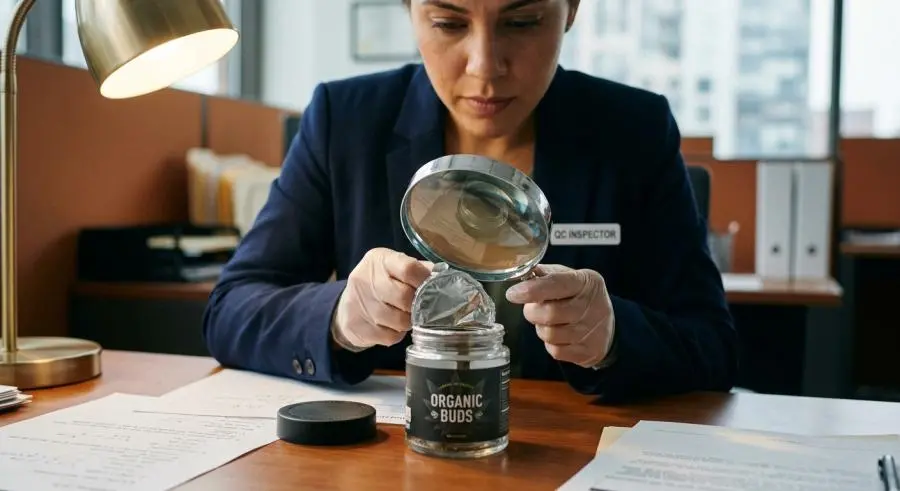
The fallout: the dispensary chain delisted the line. Consumer backlash on Reddit and X accused the brand of greenwashing. The company spent an estimated $200,000 on crisis PR and redesign.
The lesson: "Mono-material" is not a synonym for "recyclable." Third-party verification — How2Recycle or RecyClass — is required before the claim hits the shelf. Every component matters. Certification tests the full assembly, not just the primary film.
Emerging Innovation: Linerless CR Caps
Linerless child-resistant closures are the most important mono-material innovation in rigid cannabis packaging. Integrating the sealing gasket into the cap's injection-molded structure eliminates the most common contaminant in CR jar recycling.
ClosureLogic's linerless push-and-turn cap achieves ASTM D3475 certification with all-PP construction — cap, gasket, and body. Sealing performance is comparable to lined caps.
The trade-off is tooling cost: $15,000–$25,000 per cavity versus $5,000–$8,000 for lined caps. Below 100,000 units annually, lined caps are cheaper per unit. Above that threshold, eliminating the liner component — sourcing, inventory, inspection, assembly — makes linerless the lower total-cost option.
Several Chinese manufacturers now offer linerless CR cap molds at competitive pricing.
Decision Framework — Is Mono-Material Right for Your Brand?
Five Questions Every Brand Must Answer
1. What is your product's required shelf life?12+ months at room temperature? Traditional laminates remain safer. 6 months or shorter? Coated mono-material films are viable today.
2. Which states or countries do you distribute to?EU/UK effectively mandates mono-material by 2028–2030. Canada's EPR already incentivizes it. US-only brands face a fragmented landscape.
3. What is your annual volume per SKU?Below 50,000 units, the premium is hard to absorb and manufacturers have limited interest. Above 100,000, mono-material becomes negotiable and often cost-neutral.
4. Do you have resources for third-party certification?How2Recycle membership: $5,000–$15,000 per year per material category, plus submission fees. Budget for it.
5. Is your sales channel dispensary-shelf or delivery-only?Retail shelf placement comes with scrutiny. Dispensary buyers increasingly ask for sustainability credentials.
Tiered Recommendation Matrix
| Tier | Volume | Geography | Recommendation |
|---|---|---|---|
| Entry | <50k | Single US state | Focus on CR compliance. Mono-material as year-2 goal. Pilot a mono-PE pouch. |
| Growth | 50k–200k | 3–5 US states | Pilot mono-PE for highest-volume SKU. Keep glass for premium line. |
| Scale | 200k+ | Multi-state + Canada | Invest in linerless CR tooling + mono-PE pouches. Pursue How2Recycle. |
| Export | 100k+ | EU/UK | Mono-material is compliance necessity. Start with coated mono-PE for all flexible formats. |
Conclusion
Mono-material design is not a silver bullet. A mono-PE pouch with a mixed-material zipper still goes to landfill. A "recyclable" PP jar with a non-PP liner risks a greenwashing lawsuit. Most US MRFs cannot handle flexible mono-material film, no matter how well-designed the pack.
None of this means mono-material is the wrong direction. It means mono-material is a necessary foundation — not the complete solution.
The brands that will win treat mono-material as a starting point: start with flexible formats where technology is proven, prove recyclability through third-party certification, then tackle the harder problems of rigid CR design.
The cost of inaction is real. Regulatory fines, litigation from unsubstantiated claims, and lost shelf access in EPR-compliant states are accelerating. Every month your packaging stays multi-material is a month your competitor may be moving ahead.
Audit your current packaging for mono-material compatibility. Start with one SKU. Get it certified. Learn from the data. Scale from there.