I. Introduction
Every cannabis brand begins with stock packaging. It's cheap, fast, and needs zero commitment — the right call in a market where most new brands don't survive year one. But every successful brand eventually needs custom packaging. The question is not if but when.
Miss the timing in either direction and it costs you. Switch too early — before volume is consistent — and you bury cash in MOQ inventory that sits for six months. Switch too late — after consumers have already pinned your brand as "generic" — and you've lost months of shelf equity.
This article lays out a 3-stage framework — Startup, Growth, Scale — with data-backed decision rules for moving from stock to semi-custom to full custom packaging.
II. Stage 1 — Startup Phase: Stock Packaging
The Stock Packaging Advantage
Below 1,000 units per month, stock packaging is not just acceptable — it's the financially correct choice.
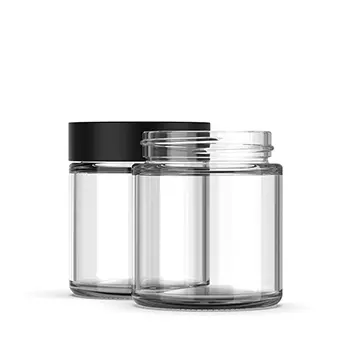
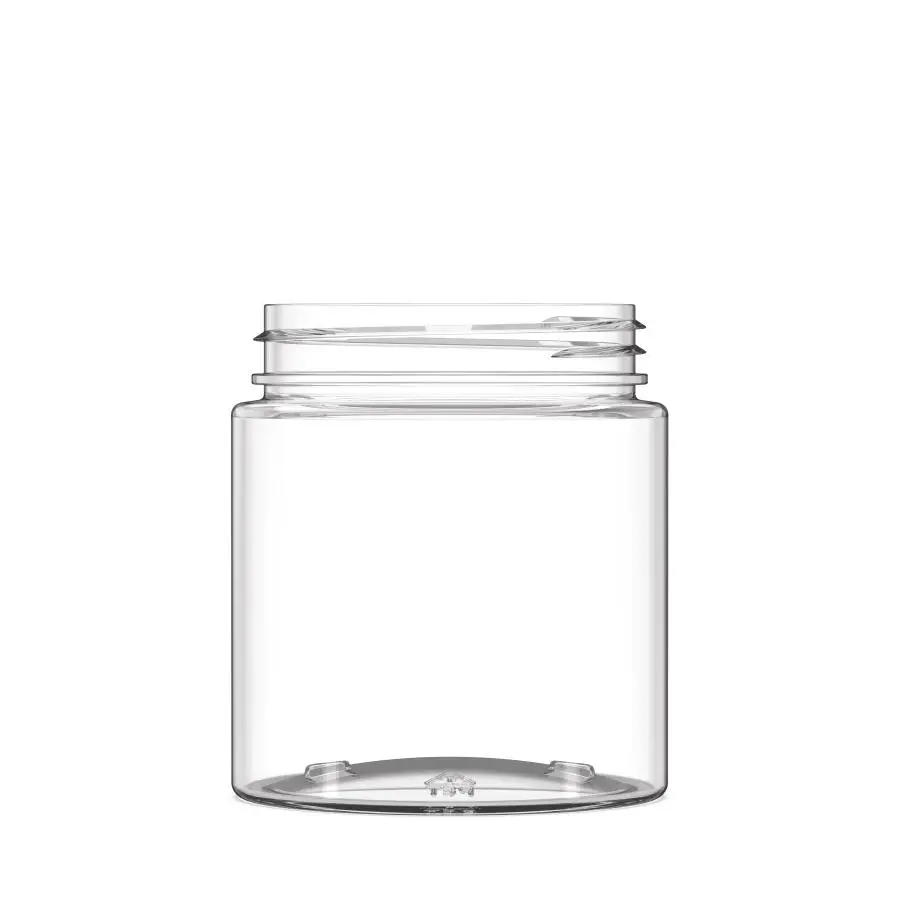
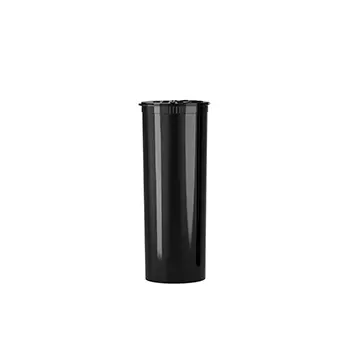
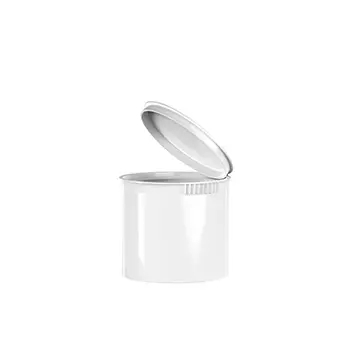
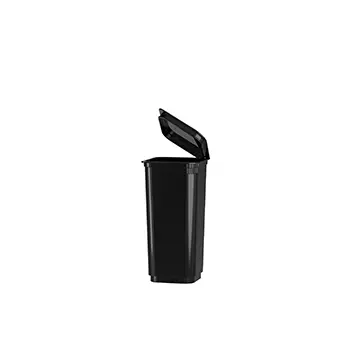
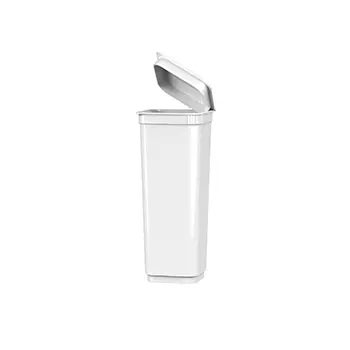
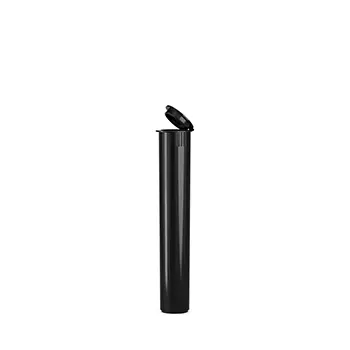
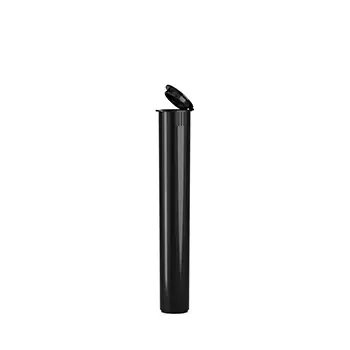
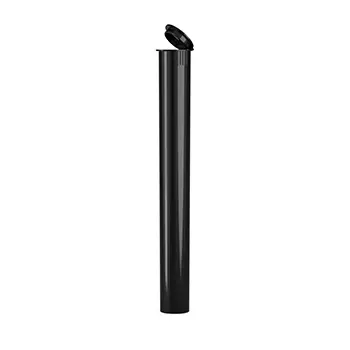
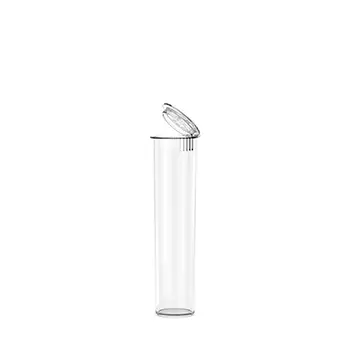
Stock bags, jars, and tubes cost $0.05–0.30 per unit. No tooling cost. No die charge. No minimum order quantity. Order 100 units today, have them tomorrow. That speed matters when you're still testing strains and iterating on formats.
Stock also gives you flexibility custom cannot: if a strain underperforms, you're not stuck with 5,000 custom-printed bags. Relabel and move on.
When Stock Holds You Back
Stock has real limits that hurt as you grow:
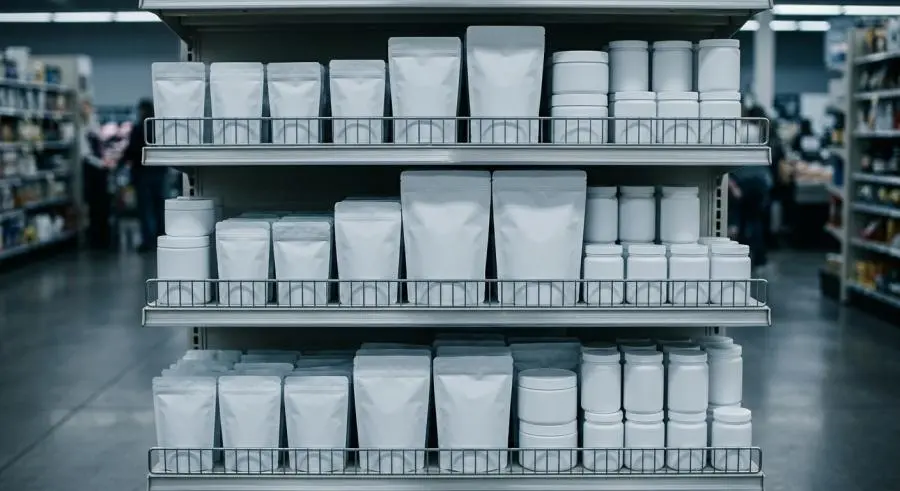
Brand invisibility. In a 2025 survey, 68% of dispensary shoppers could not recall the brand name on generic packaging after five seconds of viewing. On a crowded shelf, stock blends in.
Compliance gaps. Stock containers give limited space for warnings, test results, and brand messaging. CR features are typically bolt-on sleeves or inserts, not integrated design. As state CR regulations tighten in 2026, this becomes a liability.
Product fit issues. "One size fits most" means one size fits no one perfectly. Oversized jars create excess headspace, accelerating oxygen exposure and terpene degradation. A study found 18% greater terpene loss in containers with >30% empty headspace versus properly sized ones.
The Startup Decision Rule
Stay in stock when: production is under 1,000 units/month, or you're actively testing strains and formats.
Plan for custom when: you have 3+ consecutive months of consistent reorder data, or you're launching a flagship strain intended as a permanent SKU.
III. Stage 2 — Growth Phase: The Semi-Custom Middle Path
Semi-custom is the most underused strategy in cannabis packaging. It delivers 60–80% of the brand impact of full custom at 30–40% of the cost.
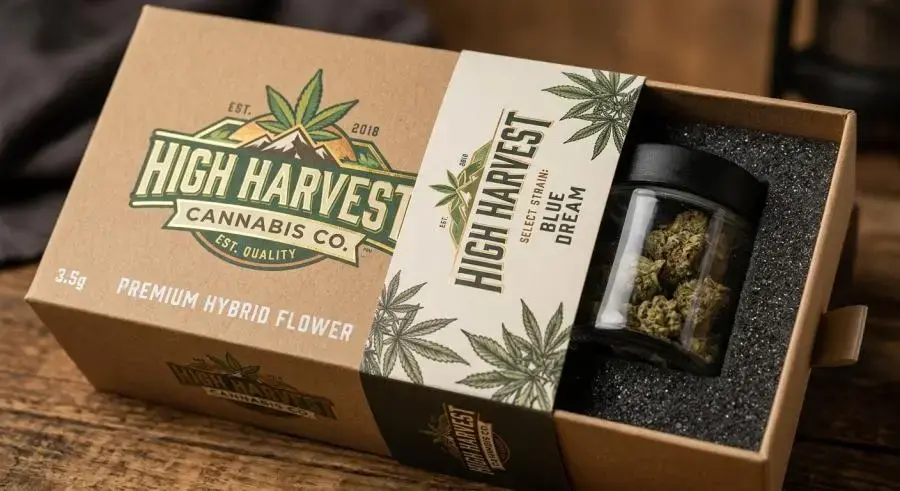
What Semi-Custom Means
Semi-custom sits between stock and full custom:
Custom print on stock die-lines: Your artwork — logo, colors, strain info — on pre-existing structures. Standard dimensions, your design.
Upgraded inserts and liners: Foam inserts, branded inner sleeves, humidity pack holders. Small additions that transform the unboxing.
Drop-in CR mechanisms: Press-tab or slide-to-open lids on standard jars and tubes. CR function without custom tooling.
Cost: $0.30–0.80 per unit. MOQ typically 500–3,000 units.
The ROI of Semi-Custom
Moving from plain stock to semi-custom delivers measurable returns:
Shelf recognition: Brands reported a 40–60% increase in consumer recall after switching (BrandTrust Packaging Study, 2025).
Perceived quality lift: In blind tests, consumers rated flower in semi-custom packaging 35% higher than the same flower in stock.
Reduced returns: Proper inserts cut shipping damage from 3–8% to under 1%.
Key Supplier Selection Criteria
Not all semi-custom suppliers are equal. Evaluate on:
| Criteria | What to Look For |
|---|---|
| MOQ flexibility | 500-unit minimums (not 5,000) |
| Lead time | 15–30 business days standard; rush at 5–7 days |
| Sample quality | Physical samples before committing |
| CR compliance support | Does the supplier provide certification docs? |
| Artwork support | In-house design team or print-ready only? |
The biggest mistake growth brands make is choosing on per-unit price alone without evaluating MOQ flexibility. A supplier charging $0.05 less but requiring 3× the MOQ ties up cash better spent on marketing.
The Growth Decision Rule
Use semi-custom when: monthly volume is between 1,000–5,000 units and you have 3–5 consistent SKUs.
Plan for full custom when: you have 5+ SKUs with consistent reorder patterns, or you're entering retail outside your home state.
IV. Stage 3 — Scale Phase: Full Custom Packaging
Full custom is the destination for brands that have achieved product-market fit and consistent volume. At this stage, packaging becomes a strategic asset.
What Full Custom Unlocks
Bespoke dimensions. Packaging built around your exact product specs. No void fill, no unnecessary headspace, no wasted shipping cube.
Integrated child resistance. CR mechanisms designed into the structure from day one — push-and-turn lids that feel intentional, not added. Bolt-on CR compromises aesthetics; integrated CR does not.
Premium finishes. Hot foil, soft-touch lamination, spot UV, embossing. 72% of cannabis shoppers associate these finishes with premium quality.
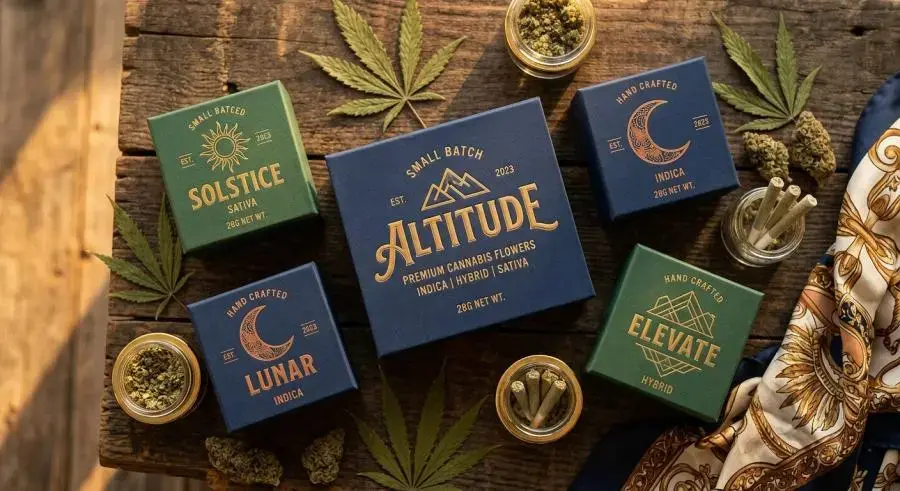
Brand IP protection. Proprietary designs cannot be copied. A signature jar or tin shape owns that visual shelf territory.
The Economics of Scale
| Cost Factor | Stock | Semi-Custom | Full Custom |
|---|---|---|---|
| Unit cost (10k+ qty) | $0.05–0.30 | $0.30–0.80 | $0.80–1.60 |
| Tooling amortization | $0 | $0–0.05/unit | $0.05–0.15/unit |
| Shipping cube efficiency | 60–70% | 70–80% | 85–95% |
| Breakage rate | 3–8% | 1–3% | <1% |
The hidden savings often exceed the visible cost increase: - Less void fill = 20–30% more units per container - Zero breakage = no replacement cost or customer frustration - Premium pricing = 20–30% higher retail on average - Fewer returns from damage claims
Several Tier-1 California brands report that $0.15–0.25/unit added cost for full custom is justified by $50+/eighth retail pricing.
MOQ Negotiation Tactics
Once you have volume, you have leverage:
Request graduated pricing. Price breaks at 5k, 10k, and 25k-unit thresholds — baked into your first PO.
Consolidate SKUs. Same structure, different print. Pools your MOQ across the product line.
Commit to annual volume. Suppliers offer 15–25% discounts for 12-month commitments.
Split tooling costs. Many suppliers cover 50% of mold costs in exchange for exclusivity.
The Scale Decision Rule
Go full custom when: monthly volume exceeds 5,000 units, or you're launching a premium line.
Re-evaluate when: entering states with different CR regulations, launching limited collaborations, or rebranding.
V. Head-to-Head Comparison Matrix
| Factor | Stock Packaging | Semi-Custom | Full Custom |
|---|---|---|---|
| Unit cost | $0.05–0.30 | $0.30–0.80 | $0.80–1.60 |
| MOQ | 0–100 | 500–3,000 | 1,000–5,000+ |
| Lead time | Same day–1 week | 2–4 weeks | 4–8 weeks |
| Brand differentiation | Low | Medium | High |
| CR integration | Add-on | Semi-integrated | Fully integrated |
| Product fit | Generic | Near-optimal | Custom-fit |
| Shelf premium | 0% | 10–15% | 20–30% |
| Best for volume | <1k/month | 1k–5k/month | >5k/month |
Key insight: These are not hard lines. A brand doing 3,000 units/month of a flagship strain may justify full custom for that SKU while keeping test strains in semi-custom. Decide per SKU, not per brand.
VI. Practical Decision Checklist
Moving from Stock → Semi-Custom
[ ] Do I have 3+ months of consistent reorder data?
[ ] Is stock packaging causing damage or returns?
[ ] Am I losing shelf presence to branded competitors?
[ ] Do I have budget for a 500–1,000 unit MOQ?
[ ] Have I identified 2–3 suppliers with flexible terms?
If 4+ checked → move to semi-custom.
Moving from Semi-Custom → Full Custom
[ ] Am I consistently ordering 3,000+ units/month per SKU?
[ ] Do I need unique CR mechanisms for specific formats?
[ ] Is the brand ready for a premium price tier?
[ ] Can I commit to 6+ months of consistent ordering?
[ ] Have I consolidated SKUs to maximize MOQ leverage?
If 4+ checked → move to full custom.
Red Flags
Switched too early: cash in 6+ month inventory, MOQ boxes filling warehouse space, design changes forced by leftovers.
Switched too late: consumers ask "what brand is this?", competitors at same price look better, buyers call your packaging generic, CR compliance relies on peeling stickers.
The sweet spot: packaging cost ≤ 8% of COGS, brand recall ≥ 40%, zero damage claims.
VII. Conclusion
Packaging strategy is not a one-time decision — it evolves with your volume, market position, and compliance needs.
Stock is correct for startups under 1,000 units/month. A tool for experimentation, not long-term branding.
Semi-custom is the optimal bridge at 1,000–5,000 units/month. Most of the brand impact at a fraction of the cost.
Full custom is the goal above 5,000 units/month. A competitive asset that justifies premium pricing and builds equity.
Final recommendation: Audit your packaging spend versus brand impact. If packaging costs less than 5% of COGS and you're in a competitive retail market, you're likely underinvesting. If it's more than 12% and you're still below 3,000 units/month, you may have switched too early.
Use the framework. Revisit it quarterly. And when the data says switch — switch.
References
Pixels & Packs. "Breaking Down the Costs: Investing in Custom cannabis packaging." 2026. https://www.pixelsandpacks.co.uk/2026/02/27/custom-cannabis-packaging-14/
Marijuana Packaging Solution. "Custom Cannabis Boxes vs. Stock Packaging: Which Is Better for Your Brand?" https://marijuanapackagingsolution.com/custom-cannabis-boxes/
AssurPack. "Unlock ROI for Your Cannabis Company." https://www.assurpack.com/news/hidden-roi-for-cannabis-containers
Packaging Digest. "Cannabis Branding: How Packaging Wins Higher Sales."https://www.packagingdigest.com/cannabis-packaging/cannabis-branding-how-packaging-wins-higher-sales
Zhibang Packaging. "Comparison Between Custom cannabis packaging and Stock Packaging."https://zhibangpackaging.com/comparison-between-custom-cannabis-packaging-and-stock-packaging/
Newround PKG. "More Than a Bag: How Custom Weed Packaging with Logo Builds Your Brand."https://www.newroundpkg.com/custom-weed-packaging-builds-brand/