Introduction
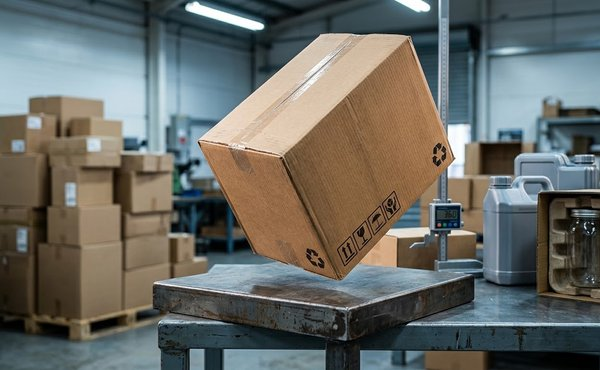
The box arrived with a crushed corner, the jar inside rattling loose. Four grams of flower survived — barely — but the unboxing moment was dead on arrival. This scene repeats thousands of times a day in cannabis e-commerce, and in almost every case the buyer picked the box by a single number: the GSM.
Grams per square meter (GSM) is the most quoted spec in paper packaging, and the most misunderstood. It describes how dense the paper is — nothing more. It does not tell you whether the box can survive a pallet stack, a forklift bump, or a humid July warehouse. Strength comes from the interaction of four things: the board type, the GSM, the structural design, and the production process.
This guide gives you a decision framework to use before you place the order — not after the boxes arrive flattened. You'll learn what actually carries weight in a paper box, which specs to put on your RFQ, and how to verify a supplier's claims instead of trusting a number on a data sheet.
GSM Is Only the Beginning — Board Types, Not Just Numbers
Start with the vocabulary. GSM is the weight of one square meter of paper or board, measured in grams. A 350 gsm paperboard is denser and stiffer than a 250 gsm board — but "denser" doesn't automatically mean "stronger for your product." The board structure underneath makes far more difference.
Three board families cover most cannabis packaging:
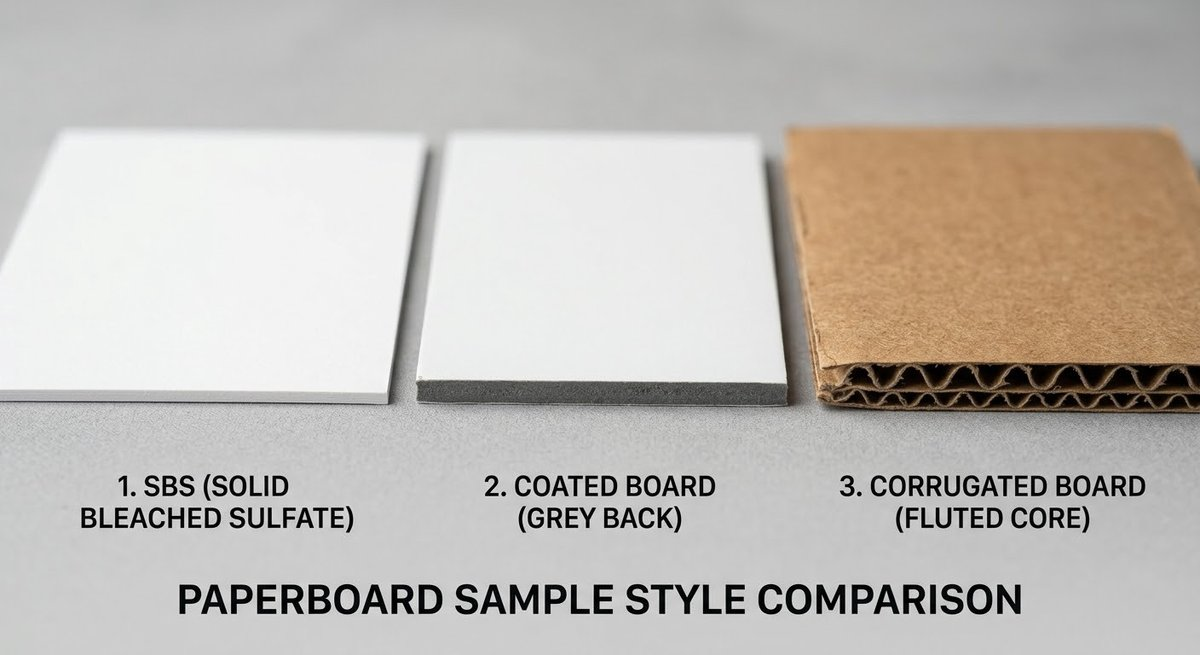
Single-layer paperboard (SBS). Solid bleached sulfate board is the classic rigid-box material. Clean, smooth, prints beautifully, and takes coatings well. A 300–400 gsm SBS box is stiff enough for a single jar or a few pre-roll tubes. Its weakness: it has no internal structure. Under a stack of other boxes, SBS relies entirely on its own thickness.
Coated white board with grey back (CCNB). Cheaper than SBS, with a grey reverse side. A workhorse for mid-weight boxes, gable boxes, and Folding Cartons. Fine in the 300–450 gsm range, but like SBS it carries no structural air.
Corrugated board. This is where the physics changes. Corrugated board sandwiches a fluted layer between two liners. The flute acts like the I-beam of a steel girder — it converts a flat sheet into a structure that resists bending and crushing. E-flute (about 1.5 mm) suits lightweight retail boxes, F-flute is thinner and prints better, B-flute (about 3 mm) handles heavier loads. A 400 gsm corrugated box will out-crush a 600 gsm flat paperboard box, because strength comes from geometry, not mass.
There's a fourth option if your product is heavy or fragile: rigid-setup boxes (the "luxury box" with a wrapped chipboard base). They're built for stacking strength and premium feel, at a higher cost.
The mental model to take away: GSM tells you the weight of the sheet. The board type tells you how that weight is put to work. Asking for "350 gsm" without specifying the board type is like ordering a steel beam by its paint color.
The Structural Math — Where Weight Capacity Actually Comes From
Load doesn't travel straight down through a box. It travels down the box walls, through the creases (fold lines), and into the bottom panel, which must transfer everything to the surface below. Each transition is a potential failure point.
Three structural decisions drive most of the real-world difference:
The crease quality. A clean, well-formed crease keeps the fold line strong. Overly deep creases (common when die-cutting hard boards with aggressive scores) crush the fibers and turn the fold into a hinge that buckles under load. Under-creased boxes fold with unsightly bulges but actually carry more weight — a tension manufacturers balance carefully.
The wall-height-to-width ratio. A tall, narrow box is structurally weaker than a squat one, because the walls act as columns and columns fail by buckling. Rule of thumb: keep box height under about 3 times the shortest base dimension for stackable retail boxes; beyond that, plan on corrugated board or internal support.
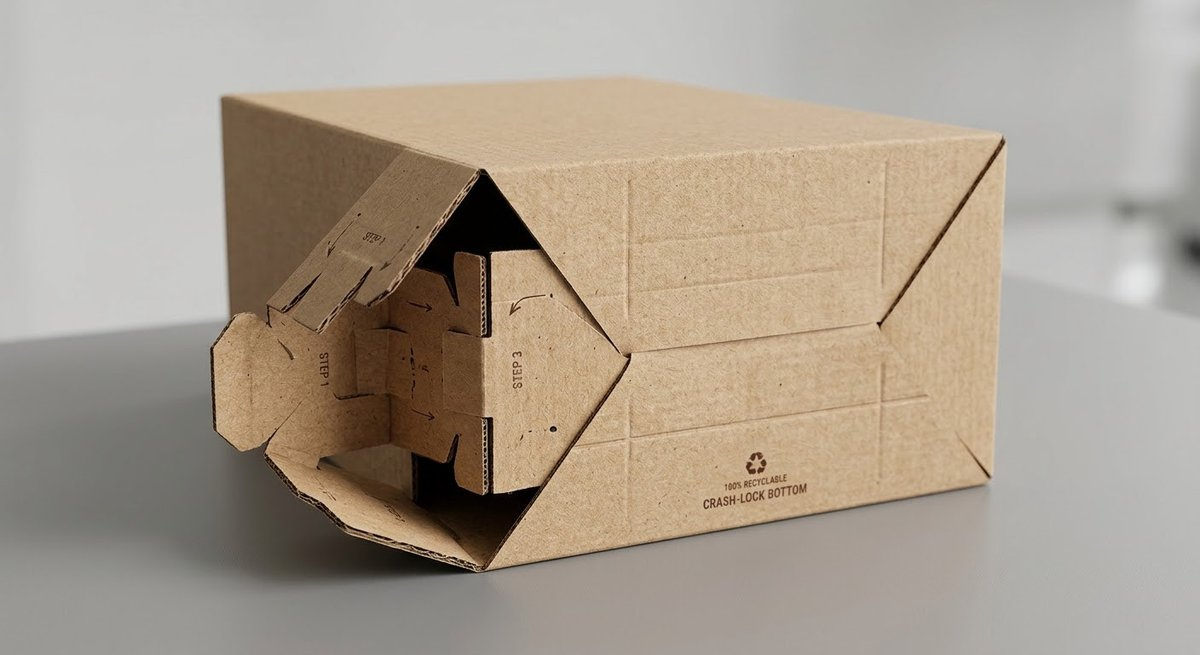
The bottom construction. This is the single biggest lever most buyers ignore: - Regular tuck (RSC-style) — flaps simply tuck in; fastest to set up, weakest bottom - Auto-lock bottom — the bottom locks itself when the box is popped open; faster packing, moderate strength - Four-corner / crash-lock bottom — interlocks on all four corners; noticeably stronger, better for heavier jars
A quick heuristic used by packaging engineers: for a folding carton, multiply your expected stacking load by a safety factor of 3 (handling adds stress beyond the static weight). If your jar weighs 400 g and you stack boxes 5 high in the warehouse, each box sees about 2 kg of static load — call it 6 kg with the safety factor. Now you know whether a 300 gsm paperboard tuck-end box is a reasonable bet or a gamble. (For that load, most engineers would move to an auto-lock bottom or corrugated.)
Stacking, Palletizing, and the Real-World Stress Tests
The lab picture is clean. The warehouse is not. Boxes sit in pallets three to six layers deep, get shoved by forklifts, vibrate for 500 miles in a truck, and then sit in a humid back room before reaching a customer. All of that stress happens after your QC inspection — which is why prototype approval alone is not proof of survival.
Transport stress is standardized, so you don't have to guess. Two references buyers should know:
- ASTM D4169 — the general standard for shipping container performance testing. It defines distribution cycles (truck, air, rail) and the vibration, impact, and compression tests that simulate each.
- ISTA 3A — the International Safe Transit Association's test for parcels shipped by small-package carriers: exactly the world of cannabis e-commerce.
Ask your supplier which standard their box passed, and ask for the test report. A supplier who can't name one is telling you the box was never tested.
Now the variable that catches almost everyone: humidity.
Paper is hygroscopic. Board strength falls as it absorbs moisture, and the drop is dramatic. At 50% relative humidity, a typical corrugated box retains most of its rated compression strength. Push the environment to 70–80% RH — normal for many US summers, brutal for any warehouse without climate control — and the same box can lose roughly half its strength. This is why "it passed our test in the factory" and "it collapsed in your customer's garage in August" are not contradictions. The board specs on a data sheet are measured at 23°C / 50% RH. Your product ships through weather, not through a lab.
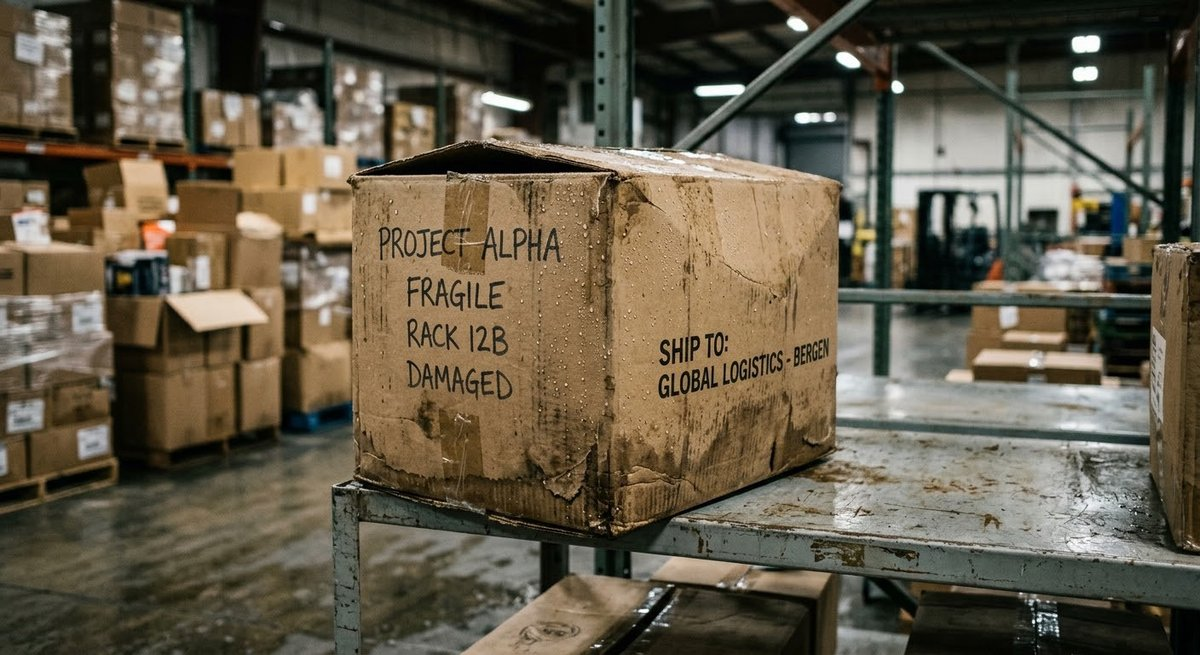
Practical mitigations: specify moisture-resistant coating or waxed liner for humid seasons, avoid over-tight pallet wrapping (stretch film squeeze actually helps stabilize, but over-wrapping can crush corners), and shorten the dwell time between packing and shipping.
Cannabis-Specific Loading Scenarios
Generic GSM advice is useless for cannabis because cannabis products load boxes in unusual ways — heavy, point-loaded, sometimes wet, sometimes oddly shaped.
The four scenarios that matter:
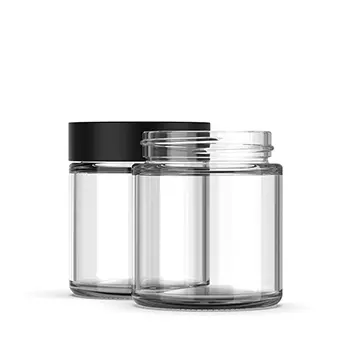
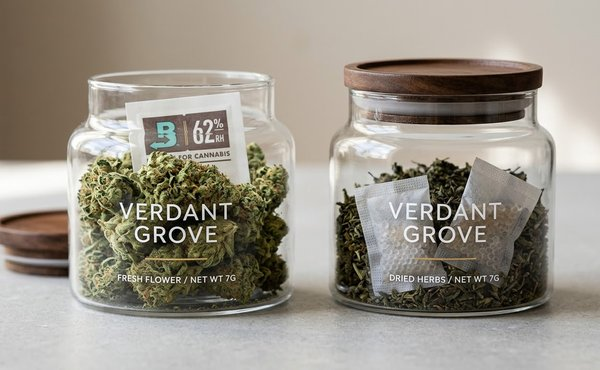
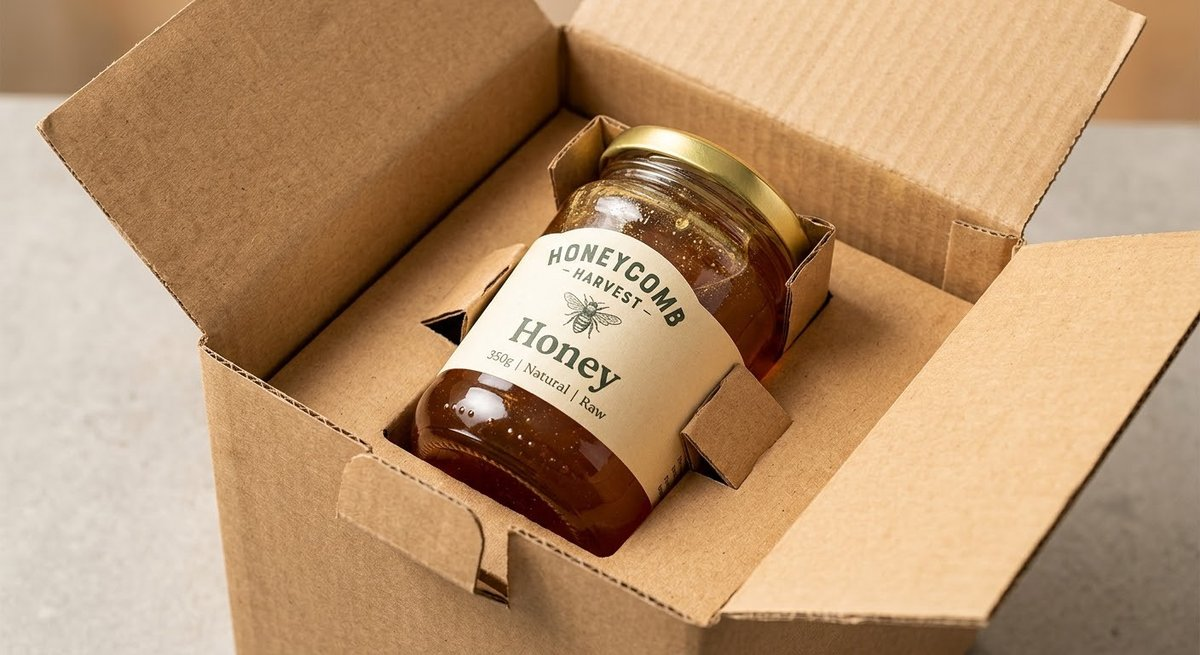
Glass Jar flower packs. A jar is heavy, rigid, and concentrated in one spot. A single 350 gsm SBS tuck box is gambling with your customer's first impression. The fix is nearly always structural: a crash-lock bottom, a divider or insert that centers the jar, and often an inner corrugated tray. Weight concentrates at the jar's bottom edge — that's where the box needs material.
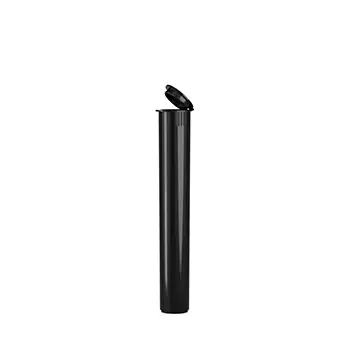
Multi-bottle and multi-tube packs. Five or ten pre-roll tubes in one box distribute load unevenly. Tubes nearest the corners take the worst abuse. An insert (paperboard or molded pulp) that locks tubes in place does more for box survival than a GSM bump. Inserts also protect tubes from crushing each other.
Edibles and gummies. Light, but crushable and temperature-sensitive. Load isn't the issue — compression is. A lightweight E-flute box with a snug fit beats a heavy paperboard box with empty space, because the product can't slide and take hits.
Vape and hardware. Heavy for their size, with sharp metal corners that can cut through thin board. Many brands spec a tray insert plus a corrugated mailer. GSM matters less than preventing the metal from sawing its way out.
| Product type | Recommended board | GSM range | Structural essentials |
|---|---|---|---|
| Single glass jar (flower) | SBS or CCNB | 350–450 | Crash-lock or auto-lock bottom, jar insert/divider |
| Pre-roll multi-pack | CCNB or E-flute | 350–400 | Tube-locking insert |
| Gummies / edibles | E-flute or F-flute | 300–400 | Snug fit, no empty travel space |
| Vape hardware | F-flute + tray insert | 300–400 | Metal-protecting tray, sturdy mailer |
| Heavy / premium combo | Corrugated B-flute or rigid box | 400+ | Inner tray, reinforced corners |
Verification Checklist Before You Order
Five checks before you sign the PO:
-
Define the load scenario in writing. Net weight per box, stack height in the warehouse, transport distance, expected season (humidity). Send this to the supplier; a good supplier will push back with design changes, a bad one will just say "sure, 350 gsm".
-
Ask for ECT and burst strength numbers. Edge Crush Test (ECT) measures box compression resistance per inch — the number that actually predicts stacking survival. Burst strength (Mullen test) measures puncture resistance. Request both for your board construction.
-
Ask which transport standard it was tested to. ASTM D4169? ISTA 3A? Ask for the report. If the answer is vague, schedule your own compression test on the first sample run.
-
Discuss the humidity boundary. Ask the supplier how board strength changes between 50% and 80% RH for their construction, and whether a moisture-resistant coating is advisable for your shipping window.
-
Require a physical prototype and a stacking test. Not a digital mockup — a physical box, packed with your actual product, stacked to your actual warehouse height for 48 hours. Photograph the result.
Conclusion
GSM is where box selection starts, and where most buyers stop. That's a mistake: the number on the data sheet says less about survival than the board type underneath, the crease quality, the bottom construction, and the humidity of the world your box will travel through.
The quick version of everything above: choose the box for your heaviest real load, add a safety factor of three, pick a board family that puts geometry to work, verify with ECT and a physical stacking test — and never test a box only in a dry conference room.
Leafly Packaging builds, tests, and ships cannabis packaging that survives the full journey — from pallet to porch. If your current box is arriving crushed, send us your product specs and we'll recommend a structure that holds up, with free prototyping on custom runs.
References
- ASTM International. ASTM D4169 — Standard Practice for Performance Testing of Shipping Containers and Systems. https://www.astm.org/d4169-22.html
- ISTA. ISTA 3A — Packaged-Products for Parcel Delivery System Shipments 4 kg and Above. https://ista.org/ista-3-series.php
- Fibre Box Association. Understanding ECT — Edge Crush Test and Box Compression. https://www.fibrebox.org/
- Corrugated Packaging Alliance. Corrugated Performance Under Humidity Conditions. https://www.corrugated.org/