Introduction
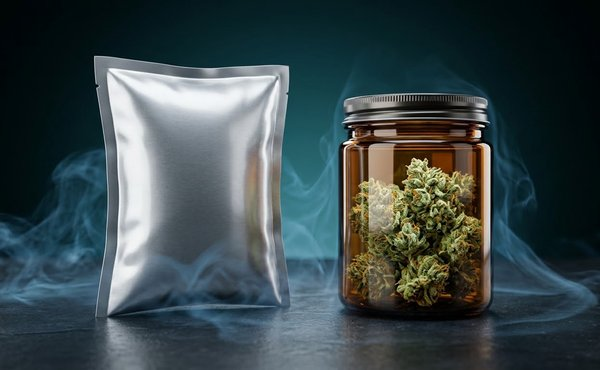
Two jars come back from the same batch. One opened up moldy — the flower was stored a few points too wet. The other crumbled to dust between the fingers — dried out until the trichomes snapped off with the leaf. Both failures look opposite. They share one root cause: moisture was managed in only one direction, or managed with the wrong tool entirely.
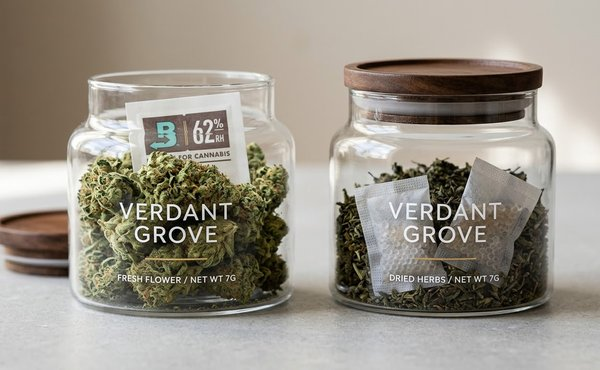
Walk any dispensary supply aisle and you'll find two small sachets that get confused constantly: humidity packs that hold a target relative humidity, and silica gel packs that strip moisture out of the air around them. They are not competing solutions. They are tools for opposite jobs, and putting the wrong one in the wrong package quietly ruins product.
This guide explains how each tool actually works, which products need which direction of control, and how to verify the whole system before your packaging order ships. Get this right and the same jar of flower stays smokeable for months; get it wrong and no amount of mylar barrier film will save it.
Why 58–62% RH Is the Target Zone
Start with the science that makes both tools necessary: cannabis flower is hygroscopic, meaning it exchanges water vapor with the air inside its container until the two reach equilibrium. The moisture level where flower settles is described by water activity (aw) — technically, the free water available for chemical reactions and microbial growth, measured on a scale of 0 to 1. Water activity tracks closely with the relative humidity (RH) of the sealed air around it: flower equilibrated at 58% RH settles near an aw of 0.58.
The industry target sits between 58% and 62% RH (aw 0.58–0.62) because that narrow band balances three failure modes:
Above ~65% RH, biology takes over. Mold species like Aspergillus germinate readily once free water is plentiful, and cannabis's dense flower structure holds moisture in the core long after the surface feels dry. Several states have turned this into hard compliance: California's Bureau of Cannabis Control requires inhaled cannabis products to test below 0.65 aw before sale. A jar that passes visual inspection can still fail a lab aw test — and a failed lab test means a destroyed batch.
Below ~55% RH, chemistry and texture degrade. Terpenes are volatile; as flower dries, the aromatic compounds evaporate first, flattening the smell that drives purchase decisions. The flower itself becomes brittle, crumbling through grinders into powder and losing weight on the scale — weight the customer paid for.
Between 58 and 62%, everything holds. Cannabinoids stay stable, terpenes stay dissolved in the plant material, flower stays pliable enough to handle without shattering, and mold has no free water to use.
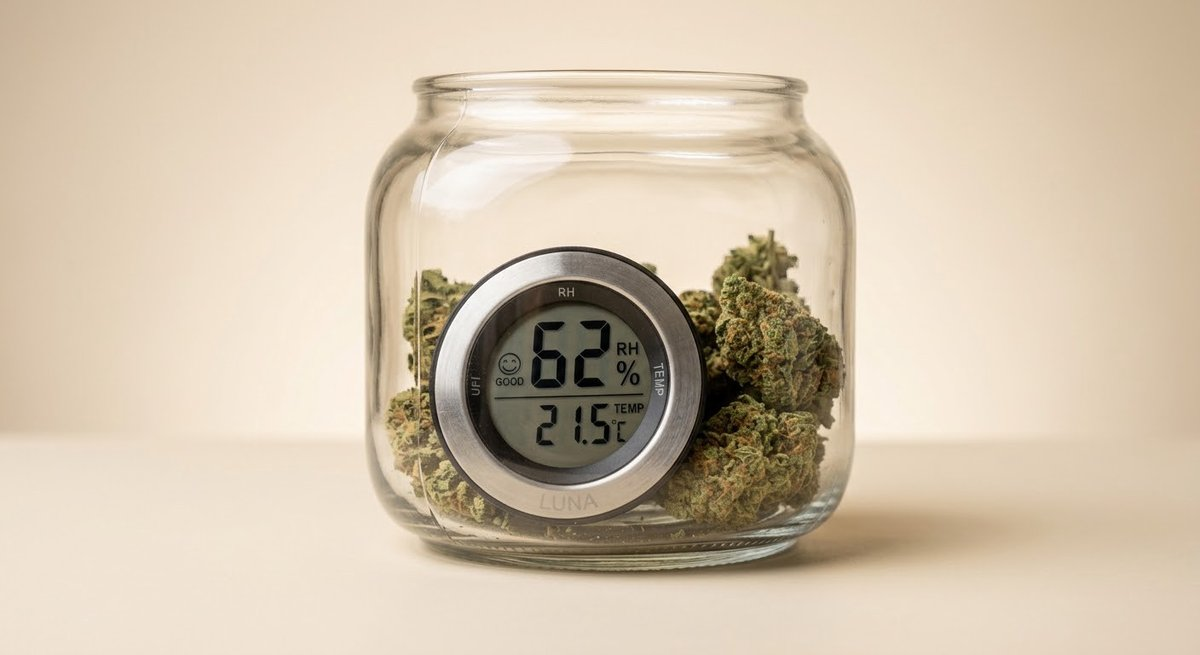
The point worth internalizing: "fresh" isn't a vague quality word here. It's a number you can measure with a $50 hygrometer, verify with an aw meter, and control with the right packet in the right jar.
How Humidity Packs Work — Two-Way Control
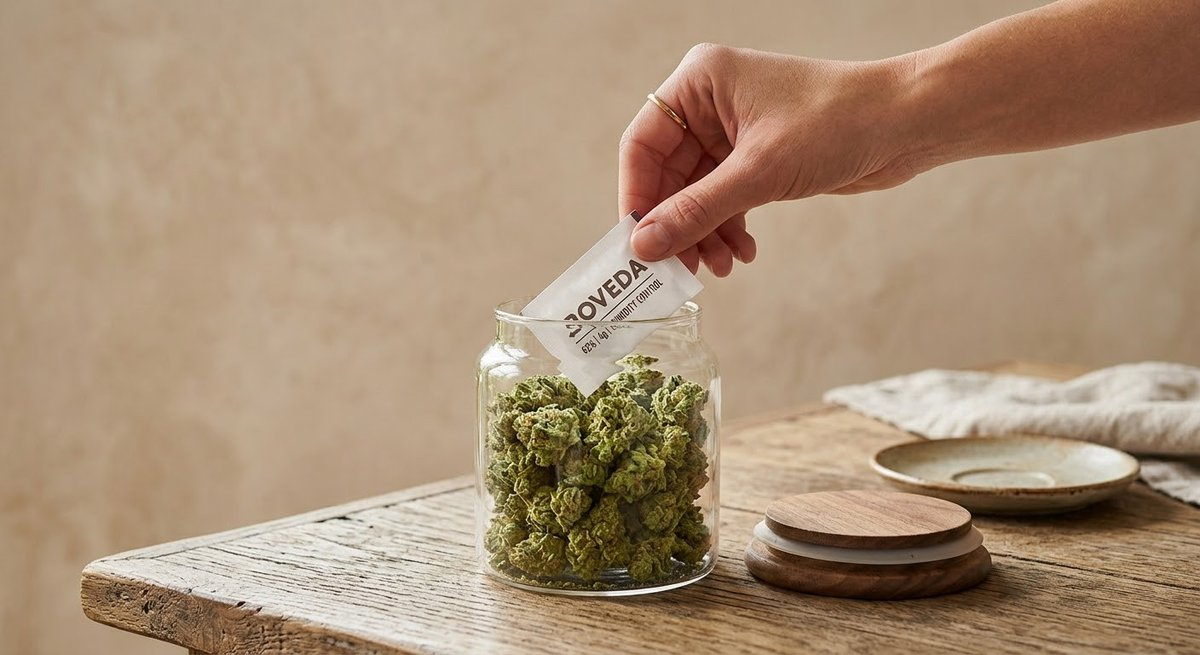
Humidity packs (the Boveda and Integra Boost style) solve the problem with saturated salt technology. Inside the sachet is a water-salt gel separated from your product by a proprietary membrane. Depending on conditions, the chemistry either releases water vapor into the container or absorbs it back into solution, settling the enclosed airspace at a precise, pre-set RH — commonly 58% or 62%.
That bidirectional behavior is the entire value. When you seal a slightly moist jar, the pack pulls excess moisture down toward 62%. When you seal flower that's drying out, the pack releases moisture to hold it up. The pack doesn't care which direction it needs to push; it maintains the setpoint automatically.
Sizing matters more than most buyers realize, because the pack has finite water capacity:
- 67-gram packs suit containers up to about 1 ounce of flower
- 8–12 gram packs fit single-eighth jars and small tins
- 4-gram packs cover gram-sized tubes and sample vials
An oversized pack wastes money; an undersized one exhausts itself within weeks trying to condition more air and biomass than its rating allows. Match pack size to jar volume, not to price.
Packs also telegraph their exhaustion. A spent humidity pack turns rigid and crusty — literally rock-hard — as its salt solution dries out. Any pack you can't flex gently between the fingers is done and should be replaced. In retail settings, build the replacement interval (typically 2–3 months in frequently opened jars) into staff routines rather than waiting for customers to report dryness.
How Silica Gel Works — One-Way Drying
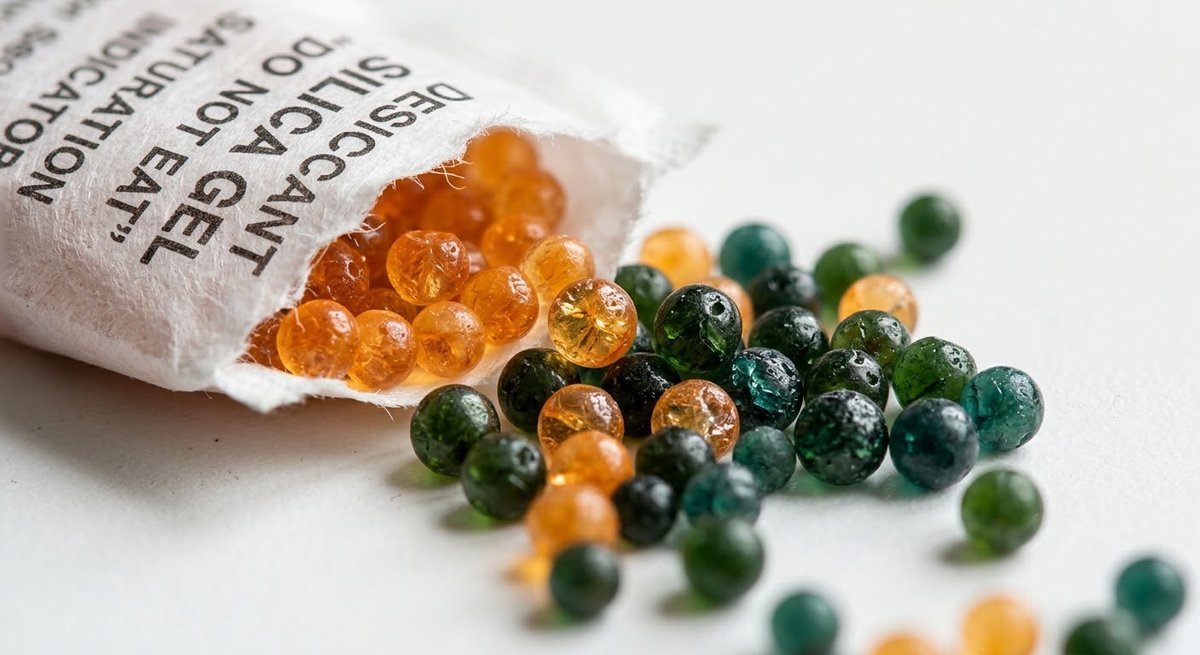
Silica gel plays a different role. It's a porous form of silicon dioxide — essentially manufactured sand riddled with microscopic pores — that adsorbs water vapor onto its internal surface area. A single teaspoon of the beads carries more interior surface area than a basketball court, which is why a small sachet can absorb roughly 35–40% of its own weight in moisture.
The critical difference from humidity packs: silica gel only pulls one direction. It absorbs until saturated, then stops. It will never release moisture back if conditions swing too dry. That makes it a drying tool, not a conditioning tool.
Most packaging-grade silica comes with an indicator: beads that shift color as they saturate (orange to dark green, or blue to pink depending on the formulation). The color change gives packers and QC staff a visible saturation signal without opening anything — when most beads in a sachet have flipped color, the sachet is spent.
Where one-way drying is actually the right answer:
- Gummies and edibles. Excess moisture makes gummies sweat, stick together, and grow surface mold. A small desiccant sachet keeps the headspace dry. Note this is the opposite logic from flower: you want low humidity here, not 62%.
- Ground material and kief products. Fine particles clump and cake when humid; drying keeps them free-flowing.
- Hardware and vape components. Metal parts, coils, and electronics benefit from a bone-dry headspace to prevent corrosion in long storage.
- Pre-shipping conditioning. Some brands place desiccant in bulk containers during warehouse storage, then remove it before retail packing.
The danger zone: silica gel in direct contact with flower. Desiccant doesn't negotiate — sealed alongside flower with no humidity pack to buffer it, it will pull the jar below the target zone within days, evaporating terpenes and shaving sellable weight. Flower wants two-way control at a setpoint; desiccant provides neither.
Matching the Tool to the Product
The decision isn't "which packet is better." It's "which direction does this product need control, if at all":
| Product | Right tool | Why |
|---|---|---|
| Flower (jars, pouches, tins) | Humidity pack, 58% or 62% | Two-way control holds the compliance-relevant aw band |
| Gummies / edibles | Silica gel desiccant | Prevents sweating, sticking, sugar bloom |
| Pre-roll multi-packs | Either none or small desiccant | Usually consumed quickly; conditioning adds little at typical turn rates |
| Concentrates / live resin | Neither — airtight + cool + dark | Any moisture packet adds risk, not value |
| Vape hardware | Small desiccant optional | Corrosion prevention in long storage |
Three recurring mistakes worth flagging:
- Pack size mismatched to container. A 4-gram pack floating in a 1-ounce jar does almost nothing; it exhausts itself in weeks.
- Expired humidity packs left in service. Rock-hard packs aren't protecting anything — they're decoration.
- Desiccant overkill on delicate confections. Even where drying is the right direction, aggressive desiccant can crack sugar shells or harden soft chews. Test how the coating behaves before standardizing on a strong pack.
Integration & Verification Checklist
Getting the chemistry right inside the package takes a few deliberate steps at ordering time:
- Specify the target RH by product line, not by SKU habit. Flower lines get 58% or 62% humidity packs sized to each container's volume; edible lines get appropriately rated desiccant.
- Require a separation layer or non-contact placement. Packs should never sit loose against product. Most quality humidity packs use a food-safe outer membrane; confirm it with documentation rather than assumption.
- Ask for food-contact compliance paperwork. Both tool types touch the same airspace as consumable product. Request FDA food-contact substance documentation for the sachet materials.
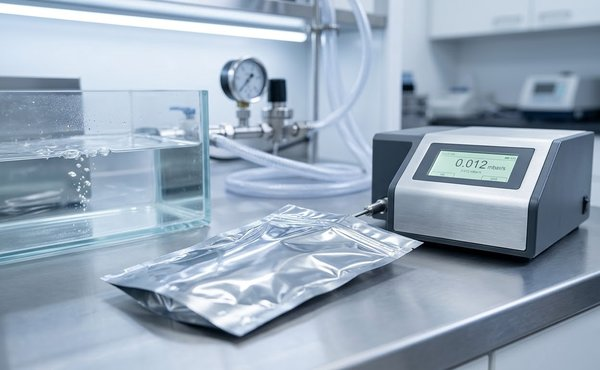
- Verify with measurement, not feel. Seal a loaded jar with a small hygrometer inside for 24–48 hours and confirm the reading lands on the pack's setpoint. For production batches, spot-check water activity with an aw meter against your state's limit (0.65 aw where applicable).
- Run a shelf-life check before scaling. Store packed samples at room temperature for 8–12 weeks and re-measure. If RH drifts or packs harden early, resize the pack before committing to a full print run.
Conclusion
Moisture control fails in both directions, so it has to be managed in both directions. Humidity packs hold flower at the 58–62% RH sweet spot using two-way salt chemistry; silica gel pulls moisture out for products that need to stay dry. They're complements, not alternatives — and the fastest way to ruin good flower is dropping a desiccant sachet into the jar because it looked similar.
The sequence that works: fix the target RH per product, choose the tool whose physics matches that goal, size it to the container, document food-contact safety, and verify the whole assembly with a meter instead of a guess.
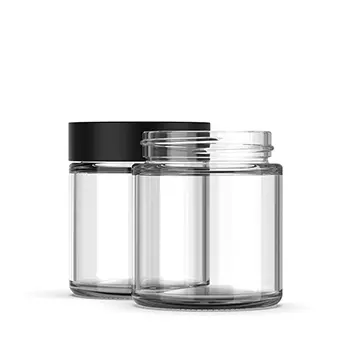
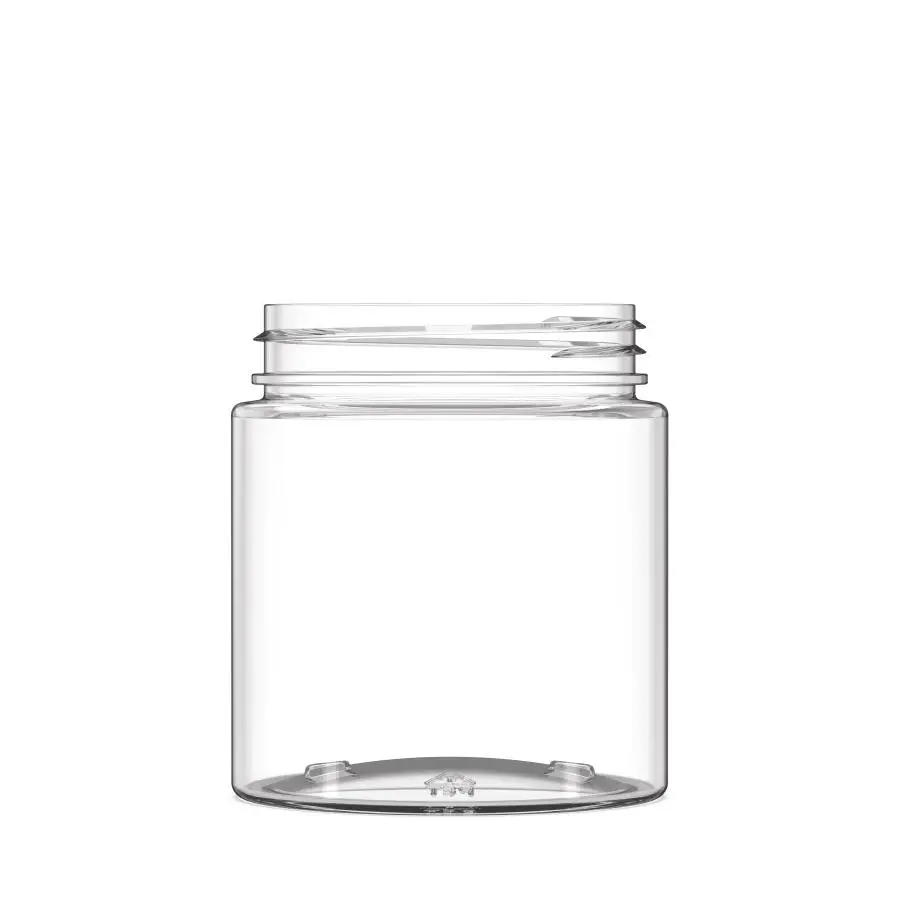
Leafly Packaging supplies complete cannabis packaging systems — barrier mylar bags, Glass Jars, CR containers, and the humidity control accessories matched to each — so what leaves your facility arrives exactly as it left. Send us your product lineup and we'll spec the right moisture solution for every SKU.
References
- ASTM International. ASTM E104 — Standard Practice for Maintaining Constant Relative Humidity by Means of Aqueous Solutions. https://www.astm.org/e0104-20r25.html
- California Bureau of Cannabis Control. Testing Regulations: Water Activity Limits for Inhaled Cannabis. https://www.cannabis.ca.gov/
- U.S. Food and Drug Administration. Food Contact Substances Notification Program. https://www.fda.gov/food/food-additives-petitions/food-contact-substance-notification-program
- Integra Boost. Humidity Control Product Specifications. https://integramypack.com/