Introduction
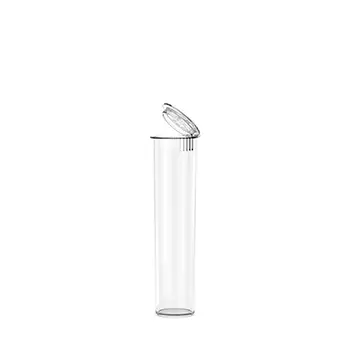
A pallet of pre-roll tubes lands at a dispensary in Colorado. Inside, half the boxes are crushed, tubes snapped, flower compressed into crumbs. The retailer wants a refund, the customer wants their money back, and your supplier in China says the packaging left the factory perfect. The photos prove nothing. Everybody is angry, and nobody has data.
That story plays out in cannabis every week — because "it was fine when it shipped" is the least testable claim in business. There is only one fix: agree on how the packaging will be tested before it ships, using a standard both sides accept.
That standard is ASTM D4169. This guide explains what it is, what it covers, and — more importantly — how a cannabis brand uses it to stop absorbing shipping damage alone.
The Transit Gauntlet — What Actually Damages Packaging in Shipping
Before any standard makes sense, understand what a package survives between your factory and a dispensary shelf. Three physical forces dominate:
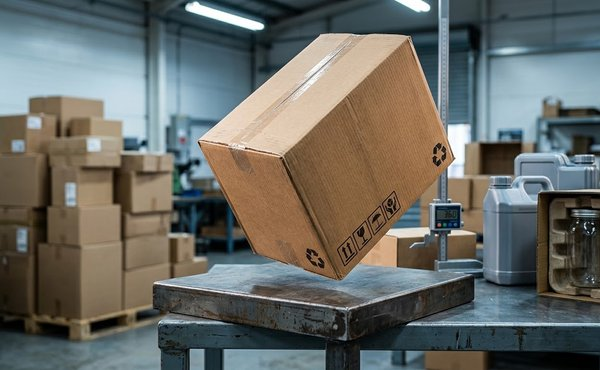
Drops. Parcels are thrown onto sorting conveyors, dropped from delivery trucks, and tossed from hand to hand. The height varies with weight: heavy boxes get tossed lower, light ones get flung faster. Every drop lands on a face, edge, or corner — and corners absorb the most energy.
Vibration. A truck bed vibrates continuously for hundreds of miles. Frequencies change with road surface, and if a package or its contents resonate at a matching frequency, the motion amplifies. Vibration is what rattles a Glass Jar against a box wall until it cracks, or shifts a pre-roll pack until the tubes rub against each other.
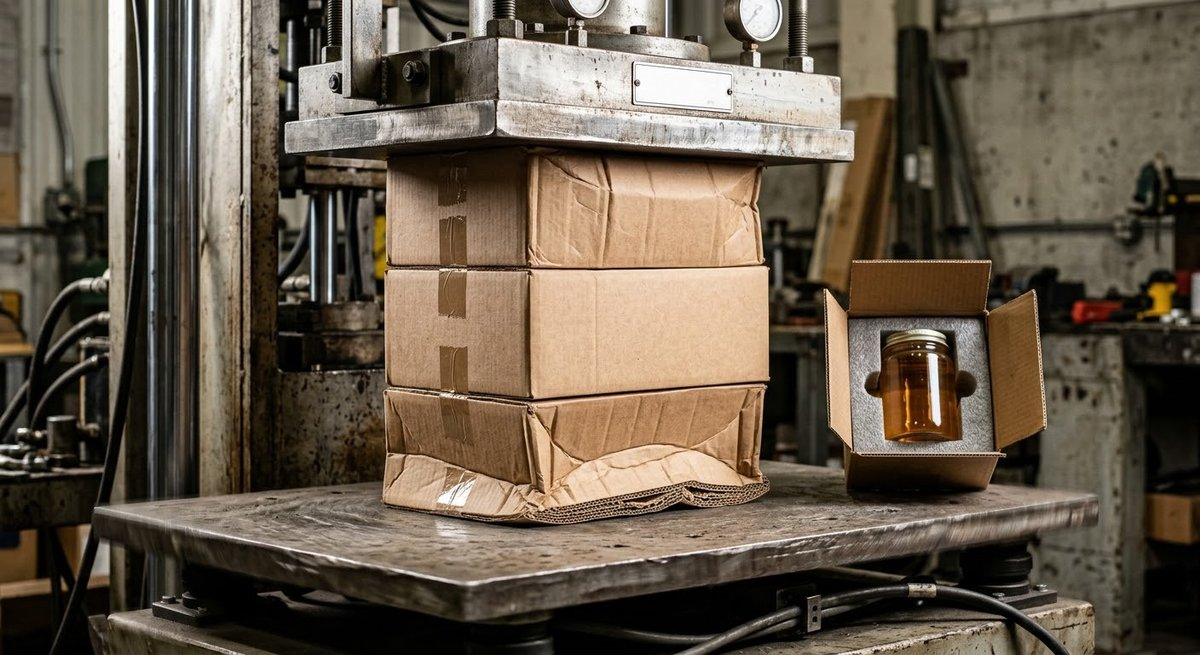
Compression. Warehouse pallets stack five or six cases high. The bottom case carries the weight of everything above it — for days, not minutes. Cardboard creeps under sustained load, and a box that passes a quick squeeze test can quietly collapse on day three of stacking.
The damage shows up in familiar forms: collapsed outer cartons, crushed inner tins, pre-roll boxes that lost their shape, and product that shifted and abraded itself in transit. In cannabis, the stakes are higher than a dented shoebox — crushed flower, broken glass, and damaged product mean destroyed inventory and compliance paperwork.

ASTM D4169 — The Standard That Speaks for Both Sides
ASTM D4169 is the "Standard Practice for Performance Testing of Shipping Containers and Systems." Put simply: it defines a repeatable laboratory sequence that simulates the physical abuse a package meets in real distribution, then judges whether the package and its contents survive.
Its key idea is the distribution cycle (DC). D4169 numbers different distribution environments — DC 1 through DC 15 and beyond — each with test intensities matched to a shipping scenario: parcel carrier, truck, rail, air freight, and combinations. You pick the cycle that mirrors how your product actually travels, and the standard tells you which drops, vibrations, compressions, and special conditions (low pressure at altitude, humidity) to apply, and how hard.
The test sequence typically includes:
- Drop test — free-fall drops from specified heights onto specified faces, edges, and corners.
- Vibration test — random vibration profiles simulating truck or sorting-conveyor input.
- Compression test — stacked-load compression at a defined force for a defined time.
Why does a published standard beat "we drop-tested it and it was fine"? Because it is repeatable, documented, and pass/fail is defined. Both sides can read the same number, run the same test in different labs, and get comparable answers. Without it, every damaged pallet is a he-said-she-said.
Drop Testing in Plain Terms
Drop testing is exactly what it sounds like, but regulated. The package is raised to a set height and released onto a hard surface, repeating across faces, edges, and corners. Heights are derived from package weight: a 10-pound box is dropped from a lower height than a 2-pound one, because heavy packages are handled more carefully — that relationship is baked into the standard's tables.
The intensity of everything is governed by the standard's Assurance Levels:
- Level I — the most severe, for hazardous or high-value products where any loss is unacceptable.
- Level II — the default for most commercial products, including most cannabis packaging.
- Level III — reduced handling, for products that ship in sturdy, dedicated containers.
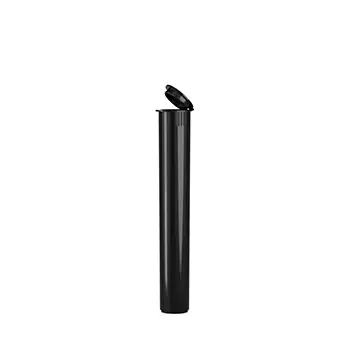
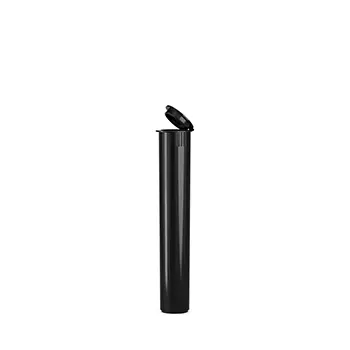
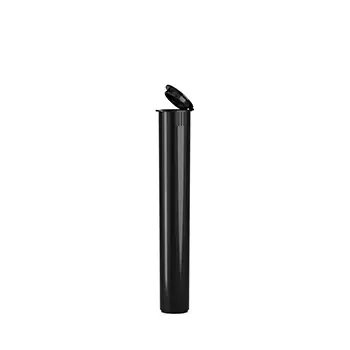
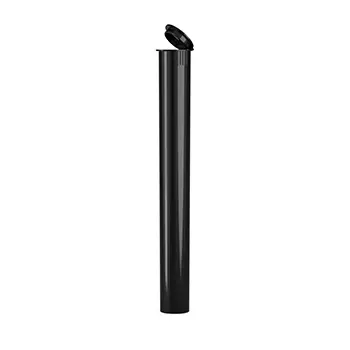
For cannabis, drop impact exposes a hierarchy of failure modes. Glass flower jars break on a corner drop. Pre-roll tubes crack or their lids pop. Tin boxes dent — functionally fine but retail-unacceptable. Rigid boxes with heavy contents fail at the corners first, because corner drops concentrate the entire package's energy into one point. The test tells you which mode dominates for your package, so you can fix it before customers see it.
Vibration & Compression — The Silent Killers
Drops are dramatic; vibration and compression are quiet and just as deadly.
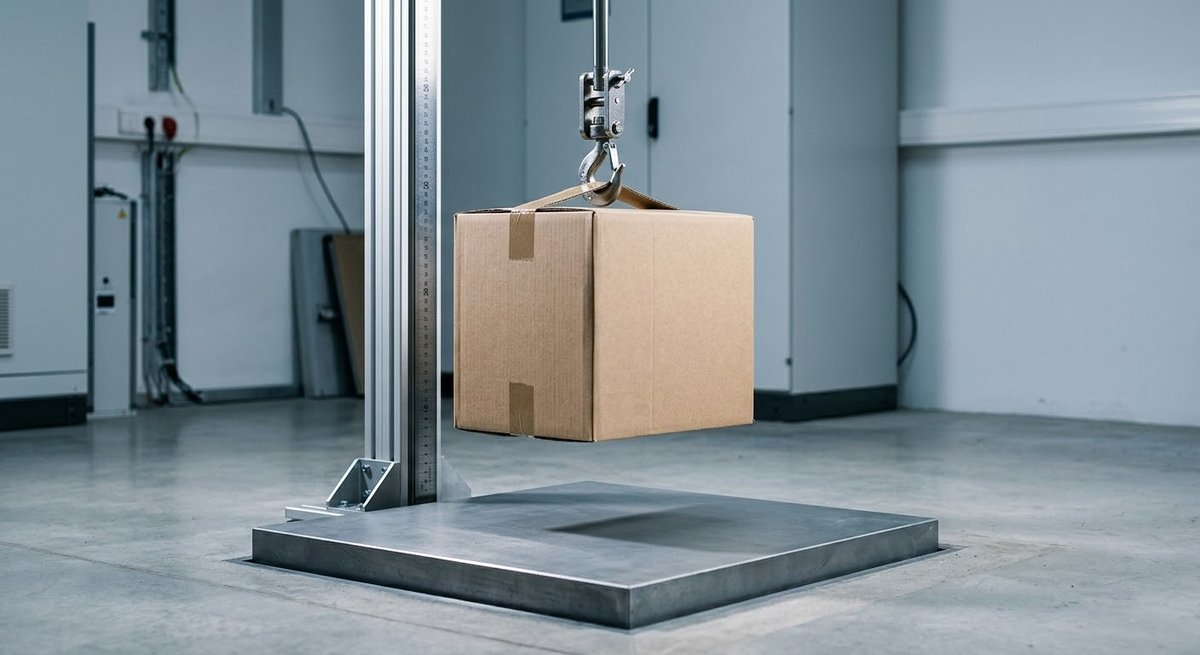
Vibration testing in D4169 uses random vibration, not a simple shake — it reproduces the jumble of frequencies a truck transmits over a real route. Resonance is the danger: a thin-walled box or a long, unsupported pre-roll tube can vibrate at a frequency the payload matches, and the displacement grows until something fails. This is why cannabis packs with internal foam or die-cut inserts survive vibration that free-floating products do not — the insert damps the motion.
Compression testing applies a sustained stacking force. The failure mode is creep: corrugated board and paperboard slowly deform under load, so a box that survives a ten-second test can fail after twenty-four hours of warehouse stacking. For cannabis, the common offender is a tall jar in a thin retail box, stacked under heavier cases — the top of the jar punctures the box above it, or the box sidewalls buckle.
Real-world tell: a brand runs vibration and compression and finds its pre-roll box's tuck flap popped open, letting tubes fall out. That never shows up in a static photo of the product. Tests catch what eyes miss.
What a Real Test Report Looks Like (And How to Read It)
A credible D4169 report is a short, specific document. Demand these elements:
- Distribution cycle number — e.g., "DC 3" for truck/parcel. No cycle number, no meaningful test.
- Assurance Level — I, II, or III, and the logic for choosing it.
- Equipment — drop tester, vibration table, compression tester; lab details matter for reproducibility.
- Sample size and condition — how many units, and whether they were filled with real product or dummy loads of equal weight. Tested empties are nearly worthless.
- Results per sample — pass/fail per drop face, vibration duration, compression time; plus photos of damage at the moment it occurs.
- Conclusion — explicit statement of whether the package met the acceptance criteria.
Red flags: a report that says only "passed, no issues" with no numbers; sample size of one; a distribution cycle chosen that is milder than the actual shipping route (air-freighted pre-rolls tested to a short-truck cycle, for example).
Five questions to put to any supplier:
- Which distribution cycle, and how did you choose it?
- What assurance level did you test at?
- How many samples, and were they filled with product-weight loads?
- What were the actual drop heights and vibration duration?
- Can we see the photos of the worst surviving sample?
If a supplier cannot answer all five, the "testing" they claim is marketing, not data.
The Buyer's Checklist — Putting D4169 in Your PO
Testing belongs in the purchase contract, not in a hopeful phone call. Add a line like this to your PO or specification sheet:
"Packaging (all SKUs listed) shall be performance-tested per ASTM D4169, Distribution Cycle ___ , Assurance Level II, minimum 5 filled samples per SKU. A signed test report with photos shall accompany each shipment's documentation."
Then close the loop on your side:

- Specify the cycle to match your real route — cross-border ocean plus US truck? Pick the DC that covers both segments.
- Require the report as a shipping document — no report, no release of the order.
- Spot-check on arrival — open a sample of each shipment within 24 hours and photograph every damaged unit; keep the pallet/carton condition visible in the photo.
- Define the dispute path — agreed in advance: e.g., damage claims above 1% trigger a batch re-test or replacement, paid by the party whose test assumptions failed.
- Iterate designs with data — when a test fails, the report tells you where; fix the design (insert, box grade, tube length) and re-test, instead of arguing.
Small brands without a lab budget can start lighter: a simplified drop check at a defined height on corners and faces, plus a video of a stacked-load test, gives direction. But put the formal test in the contract before scaling — transport damage scales with volume.
Common Mistakes
- "It didn't break, so it passed." Without matching the test conditions to the real distribution cycle, a surviving package proves nothing about your actual route. A short drop test at Level III does not certify an ocean-freight shipment.
- Testing empty containers. An empty box has a different center of gravity, different weight, and different crush resistance than a filled one. Tests on empties routinely miss the failure mode that destroys filled packages.
- Treating D4169 as a one-time exam. Packaging design is iterative; the first test often fails, and that is the point. Treat the report as a starting point for improvement — thicker board, a better insert, a sturdier closure — not as a single pass/fail gate you hope to sneak through.
Conclusion
Transport damage is a data problem disguised as a blame problem. ASTM D4169 gives both sides a shared language: distribution cycles, assurance levels, documented procedures, and a report you can hold a supplier to. Write the cycle and level into your PO, require the report with every shipment, spot-check on arrival, and feed the results back into design. Three steps — specify, require, verify — and the argument about crushed pre-rolls becomes a thing of the past.
References
- ASTM International. ASTM D4169 — Standard Practice for Performance Testing of Shipping Containers and Systems. https://www.astm.org/
- International Safe Transit Association (ISTA). ISTA Test Standards — Transit Testing for Packaged-Products. https://www.ista.org/
- SEPHA. Package Leak Testing and Container Closure Integrity Resources. https://sepha.com/test-methods/vacuum-decay/
- Westpak. How to Prevent Costly Product Damage in Transit with Drop Testing Standards. https://westpak.com/how-to-prevent-costly-product-damage-in-transit-with-drop-testing-standards/