Introduction
Walk into any dispensary in 2026 and you'll see it: "100% PCR Packaging" stamped across jars, bags, and boxes. It sounds like the perfect answer to the industry's plastic problem. But here's the question most brands never ask their supplier: how much of that recycled content actually passes food-safe standards?
Here's the uncomfortable part. PCR percentage and food-safety compliance are two completely separate dimensions. A package can be 100% recycled and still fail migration tests. A package can be 30% recycled and be fully compliant. Between the marketing claim and the lab report, most buyers lose the ability to tell the difference.
This guide gives you a decision framework built on three pillars: what the regulations actually cap, how recycled content degrades performance, and how to verify a supplier's claims in five minutes. By the end, you'll know exactly what to ask for — and what to walk away from.
What Is PCR and Why Cannabis Brands Want It
Post-Consumer vs Post-Industrial Recycled Content
Get the vocabulary right first. PCR (Post-Consumer Recycled) material comes from products that were used by consumers and collected through recycling programs — bottles, jugs, containers. PIR (Post-Industrial Recycled) material comes from factory waste: trim, rejected parts, off-spec runs that never reached a consumer.
The distinction matters more than most buyers realize. PIR is relatively clean and predictable — you know what went into it because you made it. PCR is the opposite: an uncontrolled stream of used products with unknown histories. That uncertainty is exactly why food-contact regulators treat PCR far more strictly than PIR.
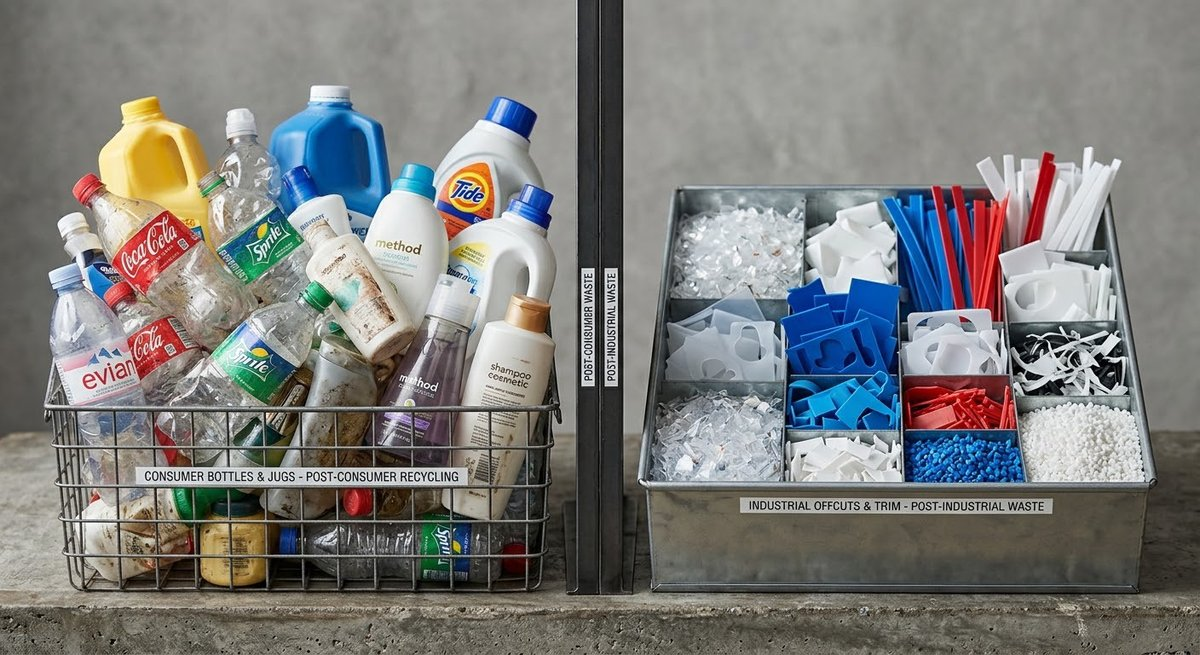
For cannabis packaging specifically, this matters because most "recycled" claims on dispensary shelves reference PCR. It's the more impressive story — and the harder compliance problem.
The Market Pull: Sustainability as a Buying Criterion
Why are brands chasing PCR at all? Because buyers are asking for it. Consumer research consistently shows a willingness to pay a premium for sustainable packaging — with cannabis consumers among the most sustainability-sensitive demographics. Retailers are adding sustainability criteria to supplier scorecards. ESG reporting is pushing brands to document recycled content percentages.
The pressure is real. But it's being answered with marketing first and engineering second. When a brand demands "PCR packaging," the default supplier response is to increase recycled content until the label looks good — often without asking the question that actually matters: does it still meet food-contact requirements at that level?
That gap between what buyers ask for and what regulators require is exactly where this guide steps in.
The Regulatory Ceiling — How Food-Safe Rules Cap PCR Content
FDA 21 CFR & the Recycled Plastics Evaluation Process
First thing to understand: the FDA does not pre-approve recycled plastics for food contact. There is no "FDA-approved recycled resin" list to point to. Instead, the FDA evaluates recycled materials on a case-by-case basis through its Recycled Plastics program, and the burden of proof sits with the manufacturer.
The evaluation centers on two questions:
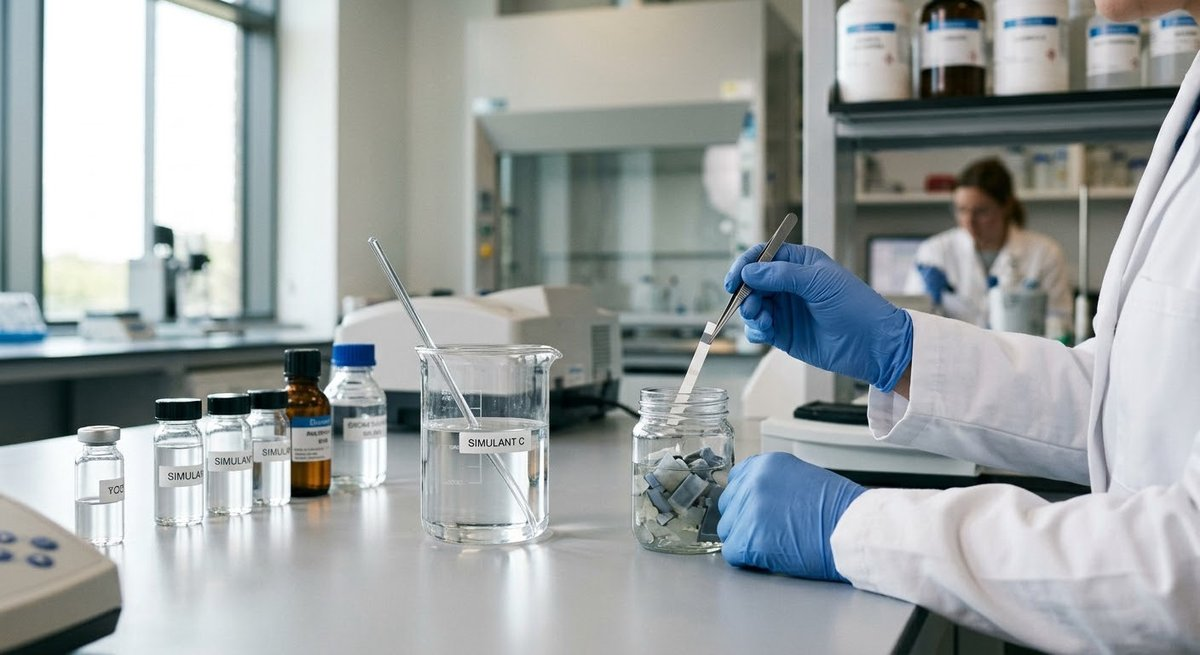
- Can the recycling process effectively remove contaminants? The FDA expects the recycling technology to demonstrate it can strip out the pollutants that entered the plastic during its consumer life — food residues, chemicals absorbed from misuse, degradation byproducts.
- Does the finished material meet migration limits? The recycled resin must perform comparably to virgin material in migration testing — both total migration and specific migration of individual substances.
In practice, a "food-contact grade" PCR claim should be backed by a letter from the resin supplier documenting their FDA evaluation, plus migration test data. If your supplier can't produce either, the claim is just marketing.
State-Level Cannabis Packaging Rules That Interact with PCR
Cannabis adds a second regulatory layer on top of federal food-contact rules. While cannabis itself remains federally illegal, packaging that touches the product is typically expected to meet food-contact standards — and several states add their own requirements.
California's Proposition 65 is the one most brands overlook. Prop 65 requires businesses to warn about exposure to listed chemicals. Recycled plastics are a known risk area here: the uncontrolled feedstock can reintroduce chemicals that virgin resin never contained. A package that passed food-contact migration testing at the federal level can still create Prop 65 exposure risk if the recycled stream contains a listed chemical above safe-harbor levels.
Other states layer on their own child-resistant and labeling rules. The point isn't to enumerate every state — it's to understand that PCR packaging sits at the intersection of two regulatory regimes, and compliance means satisfying both.
Common Misconception: "100% Recycled" ≠ "Food-Safe"
The single most expensive misconception in this industry: recycled content percentage is treated as a proxy for environmental virtue and compliance. It is neither.
- 100% recycled describes feedstock. It says nothing about whether the finished package passes migration testing.
- Food-safe describes the finished article's interaction with food. It says nothing about how much recycled content it contains.
A 100% PCR bottle can fail migration tests because the recycled stream carried a contaminant the cleaning process didn't fully remove. A 30% PCR structure can be fully compliant and perform identically to virgin material.
The red flag: suppliers who lead with recycled percentage instead of compliance documentation. When the first thing out of their mouth is "we're 100% PCR," ask the second question: "And where's your migration test report?"
Performance Trade-Offs at Every PCR Percentage
Barrier Properties: OTR & MVTR vs Recycled Content
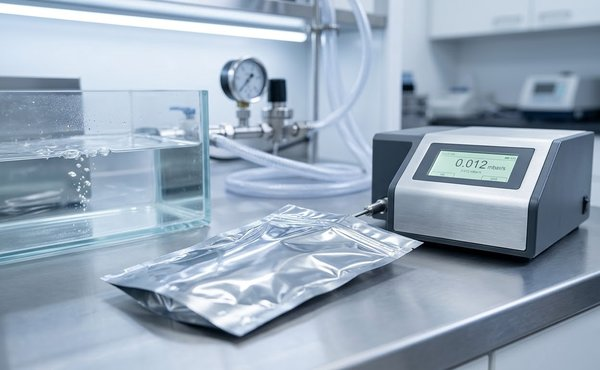
Recycled content changes more than the label — it changes the physics of the package. The two numbers that matter for cannabis are OTR (Oxygen Transmission Rate) and MVTR (Moisture Vapor Transmission Rate). Oxygen degrades cannabinoids and terpenes; moisture swings drive mold risk and texture loss. Both are directly affected by recycled content.
The general pattern, confirmed across multiple third-party evaluations:
| PCR Content | OTR (relative to virgin) | MVTR (relative to virgin) | Typical Use |
|---|---|---|---|
| 0% (virgin) | Baseline | Baseline | Highest-barrier applications |
| 30% | +5–10% | +5–10% | Most applications, minimal impact |
| 50% | +10–20% | +10–20% | Non-critical contact, short shelf life |
| 100% | +20–40% | +20–40% | Marketing-driven, verify carefully |
The mechanism is straightforward: recycled resin contains polymer chains that have already been through one thermal cycle, plus residual contaminants that act as weak points for gas and moisture to pass through. Every additional recycling cycle degrades barrier performance further.
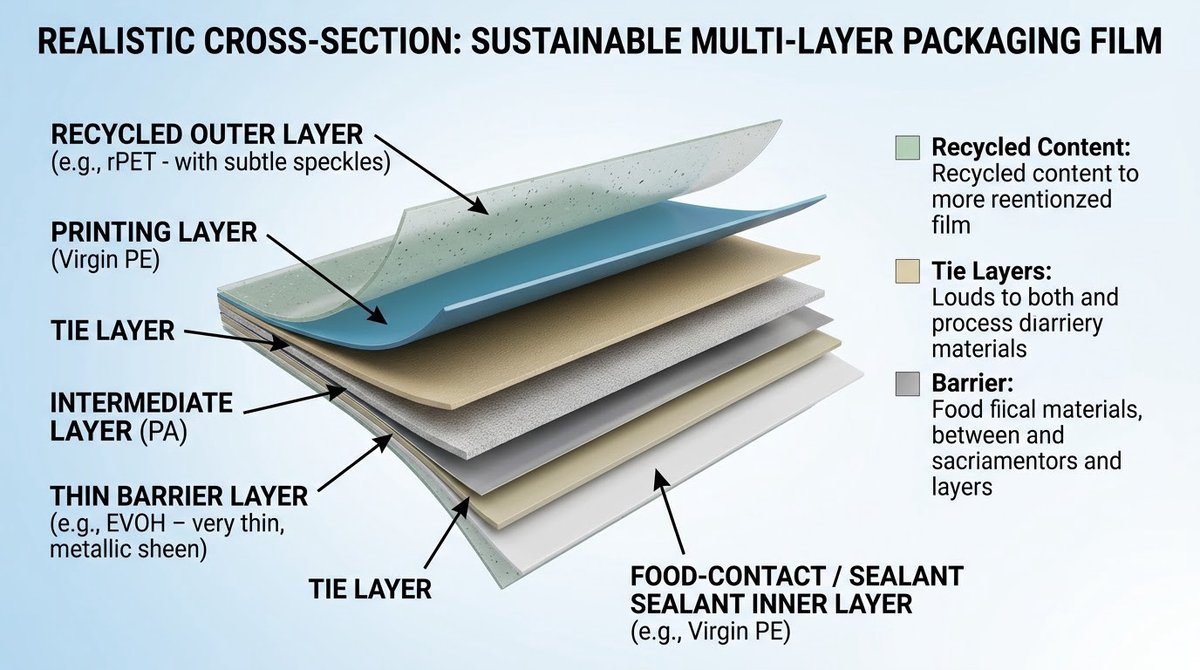
The engineering response is a multi-layer structure: keep a thin virgin barrier layer (EVOH or virgin PET) on the inside, and use PCR content in the outer structural layers where barrier performance matters less. That's how smart brands get high PCR percentages and shelf-life protection — the PCR is real, but it's placed where it can't hurt the product.
Visual & Mechanical Degradation
Barrier isn't the only casualty. PCR content visibly degrades appearance:
- Yellowing. Recycled resin yellows faster, especially under UV exposure on dispensary shelves. For a product where the flower's color sells the purchase, a yellowed jar is a silent killer.
- Clarity loss. Haze and opacity increase with recycled content — critical for clear PET jars where consumers want to see the product.
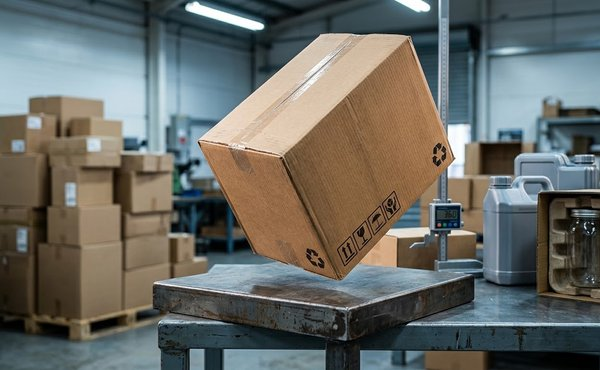
- Impact strength. Repeated thermal cycling shortens polymer chains. Drop-test failures become more frequent at higher PCR percentages.
The CR (child-resistant) mechanism deserves special attention. CR closures rely on precise tolerances — the push-and-turn or squeeze-and-pull action depends on components flexing exactly right. If recycled content changes dimensional stability or flexural modulus, a closure that passed ASTM D3475 in virgin material can fail in recycled. Any CR package that switches to PCR needs a full re-test, not a paperwork assumption.
Odor & Contaminant Risks
This is the one buyers rarely think about until it's too late. Recycled plastics carry odor. The feedstock has lived a life — it absorbed smells from whatever was in the bottle, and not all of it washes out in recycling.
For flower, this is existential. Cannabis is a product where consumers smell before they buy. A package that smells like old soda or detergent will kill a sale regardless of how well it protects the flower. Odor testing (and often an odor-barrier inner layer) becomes mandatory for PCR packaging destined for flower.
Contaminant risk runs deeper than smell: heavy metals, ink residues, and processing chemicals can survive the recycling process. That's why the verification step below isn't optional — it's the difference between a compliant package and a compliance incident.
How to Verify Your Supplier's PCR Claims
Certifications That Actually Mean Something
The certification landscape looks like alphabet soup, but only a few marks are worth your time:
| Certification | What It Verifies | Caveat |
|---|---|---|
| GRS (Global Recycled Standard) | Chain-of-custody of recycled content | Verifies percentage, NOT food safety |
| SCS Recycled Content | Recycled content percentage via audit | Same limitation — content only |
| UL 2809 | Recycled content claims, environmental claims | Content verification, not migration testing |
The pattern is unmistakable: every recycled-content certification verifies the percentage — none of them verify food safety. That's not a flaw in the certifications; it's a boundary. Recycled content and food safety are different questions, and you need different documents to answer each one.
Documents to Request from Your Supplier
When a supplier claims food-contact-compliant PCR, ask for these four documents:
- Resin supplier's FDA evaluation letter — the "letter of no objection" or documented FDA Recycled Plastics evaluation from the resin manufacturer. This is the foundation.
- Migration test report — total migration and specific migration data for the finished package, not just the resin. Packaging converts resins into structures; the structure is what contacts the product.
- Recycled content audit certificate — GRS or SCS certificate with your supplier's name and current validity dates. Check the certificate number on the issuer's website; expired or borrowed certificates are common.
- Batch traceability documentation — lot numbers that connect each shipment back to the audited production run.
If any of the four is missing, ask why. There's a legitimate answer for missing batch traceability on a first order. There is no legitimate answer for missing migration test data on a food-contact claim.
The 5-Minute Supplier Verification Checklist
Time-boxed verification, in order:
- Ask for the FDA letter (or documented evaluation). 30 seconds. If they hesitate, that's your answer.
- Ask for migration test data on the finished package. 1 minute. Not the resin — the package.
- Ask for the GRS/SCS/UL 2809 certificate number. 1 minute. Then verify it online at the issuer's site while they're still on the call.
- Ask for the lot traceability process. 2 minutes. Not the document — the process. How would they trace a specific batch if you needed to?
- Run a spot check. First production run: send a sample to an independent lab for migration and PCR content verification. The supplier who passes your spot check is a supplier you can trust.
The whole thing takes less time than a coffee break — and it separates packaging suppliers who understand compliance from those who just repeat marketing phrases.
Choosing the Right PCR Blend for Your Product
Match PCR to Product Risk Profile
Not all cannabis products face the same packaging risk. The right PCR percentage depends on what's inside:
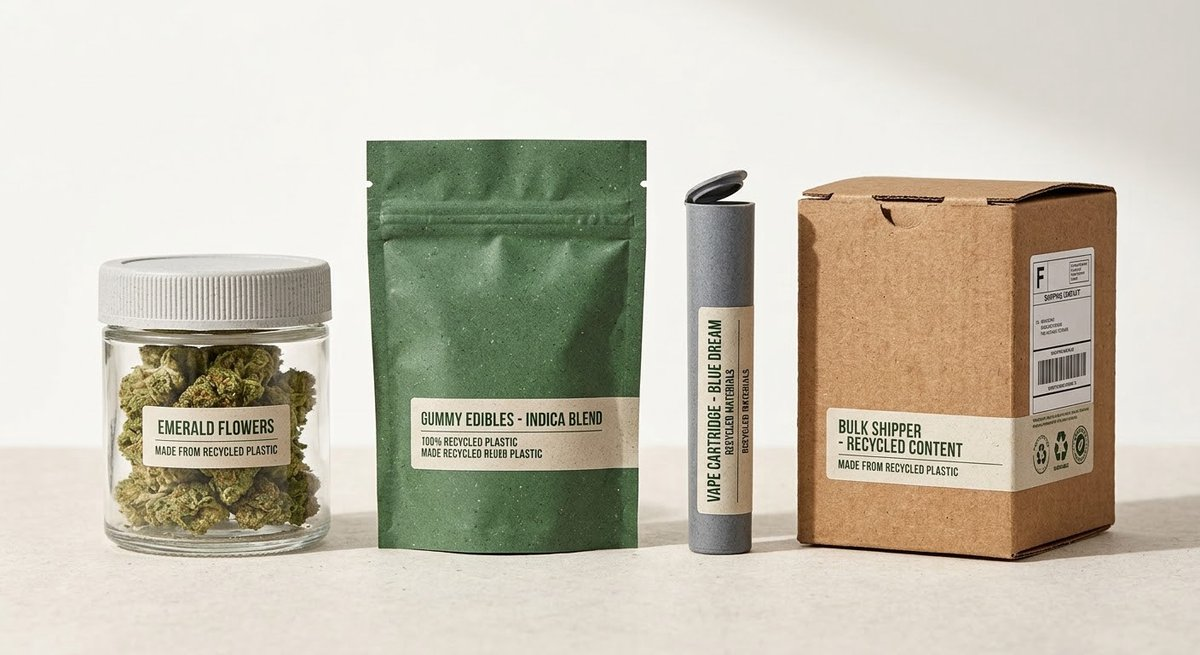
| Product Type | Risk Profile | Suggested Approach |
|---|---|---|
| Flower | Odor-sensitive, terpene-sensitive, long shelf life | Low PCR (0–30%) in a multi-layer structure with a virgin barrier inner layer; odor testing mandatory |
| Edibles | Direct food contact, migration testing strict | Moderate PCR (30–50%) with full migration documentation; verify each resin batch |
| Vape / Concentrates | High-heat contact, solvent exposure | Low PCR (0–30%); high PCR risks contaminant extraction under heat |
| Non-contact packaging (boxes, displays, shipping) | No product contact | High PCR (50–100%) — this is where you can safely maximize recycled content |
The logic is simple: put the recycled content where it can't hurt the product, and put the compliance budget where the product touches the package. A brand can be genuinely sustainable with 100% PCR outer packaging and a 30% PCR inner jar — the overall footprint drops while product risk stays controlled.
Cost, MOQ, and Lead-Time Reality
PCR isn't free. Expect a 10–30% premium on PCR resin compared to virgin, with the gap fluctuating with feedstock availability. Minimum order quantities tend to run higher because PCR runs need dedicated line cleaning and more frequent changeovers. Lead times stretch as suppliers juggle PCR feedstock availability against virgin stock they keep on hand.
The practical path is gradual: start with a pilot at 30% PCR on one SKU, validate the finished package (migration, odor, drop test, CR re-test), then scale the percentage and the SKU count. Brands that jump straight to "100% PCR across the line" typically discover the failure modes the pilot would have caught — at line-scale cost.
One more reality: PCR percentages on a certificate are not the same as PCR percentages in the finished package. The certificate covers the resin; the finished package is a structure of multiple layers and components. Always confirm what percentage applies to your package, not just to the raw material.
Conclusion: Compliance Verified, Then Percentage Celebrated
Here's the honest summary: recycled content is a goal worth pursuing, but it's the second question you should ask about a package. The first question is always compliance.
- PCR percentage describes the feedstock. Food-safety describes the finished package. Never let one stand in for the other.
- The regulations cap what you can safely claim, not what you can print. FDA evaluates recycled plastics case by case; states like California add their own exposure requirements. Print "100% PCR" only after the migration data earns it.
- Performance degrades measurably with recycled content — barrier, clarity, strength, odor. Multi-layer structures recover most of it, but only if engineered deliberately.
- Every recycled-content certification verifies percentage, not safety. GRS, SCS, and UL 2809 answer "how much is recycled?" — migration test reports answer "is it safe?" You need both.
- The 5-minute verification checklist separates real suppliers from marketing. Ask for the FDA evaluation, the migration report, the certificate number, the traceability process — and spot-check the first production run.
Your five-step action plan:
- Define your target PCR percentage by product risk profile — not by marketing pressure.
- Request the four documents (FDA evaluation, migration report, certificate, traceability) before signing anything.
- Verify certifications online at the issuer's site.
- Re-test performance — barrier, odor, drop, and CR — at your chosen PCR level.
- Pilot at 30% on one SKU, then scale with data.
Sustainability and compliance aren't competing goals. They're two sides of the same engineering decision — and the brands that get both right are the ones who asked the hard questions before the label was printed.
Need compliant PCR packaging for your cannabis line? Leafly Packaging builds food-contact-grade recycled packaging with full migration documentation — talk to our team to find the right PCR blend for your product.
References
- https://www.fda.gov/food/packaging-food-contact-substances-fcs/recycled-plastics-food-contact — FDA Recycled Plastics for Food Contact: evaluation process and regulatory framework
- https://textileexchange.org/knowledge-center/documents/global-recycled-standard/ — GRS (Global Recycled Standard): recycled content chain-of-custody certification
- https://www.ul.com/resources/ul-2809-environmental-claim-validation-procedure — UL 2809: recycled content environmental claim validation
- https://oehha.ca.gov/proposition-65 — California Proposition 65: chemical exposure warnings for packaging materials
- https://www.astm.org/d3475-20.html — ASTM D3475: standard classification of child-resistant packages